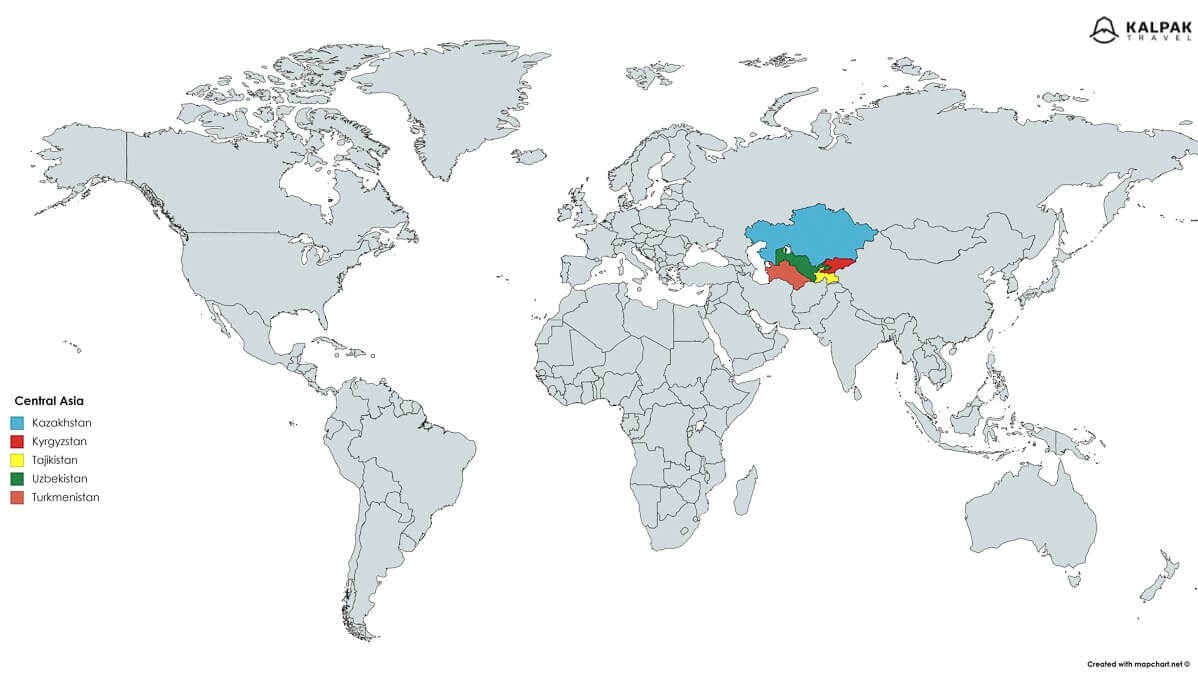
When to visit the Five Stans?
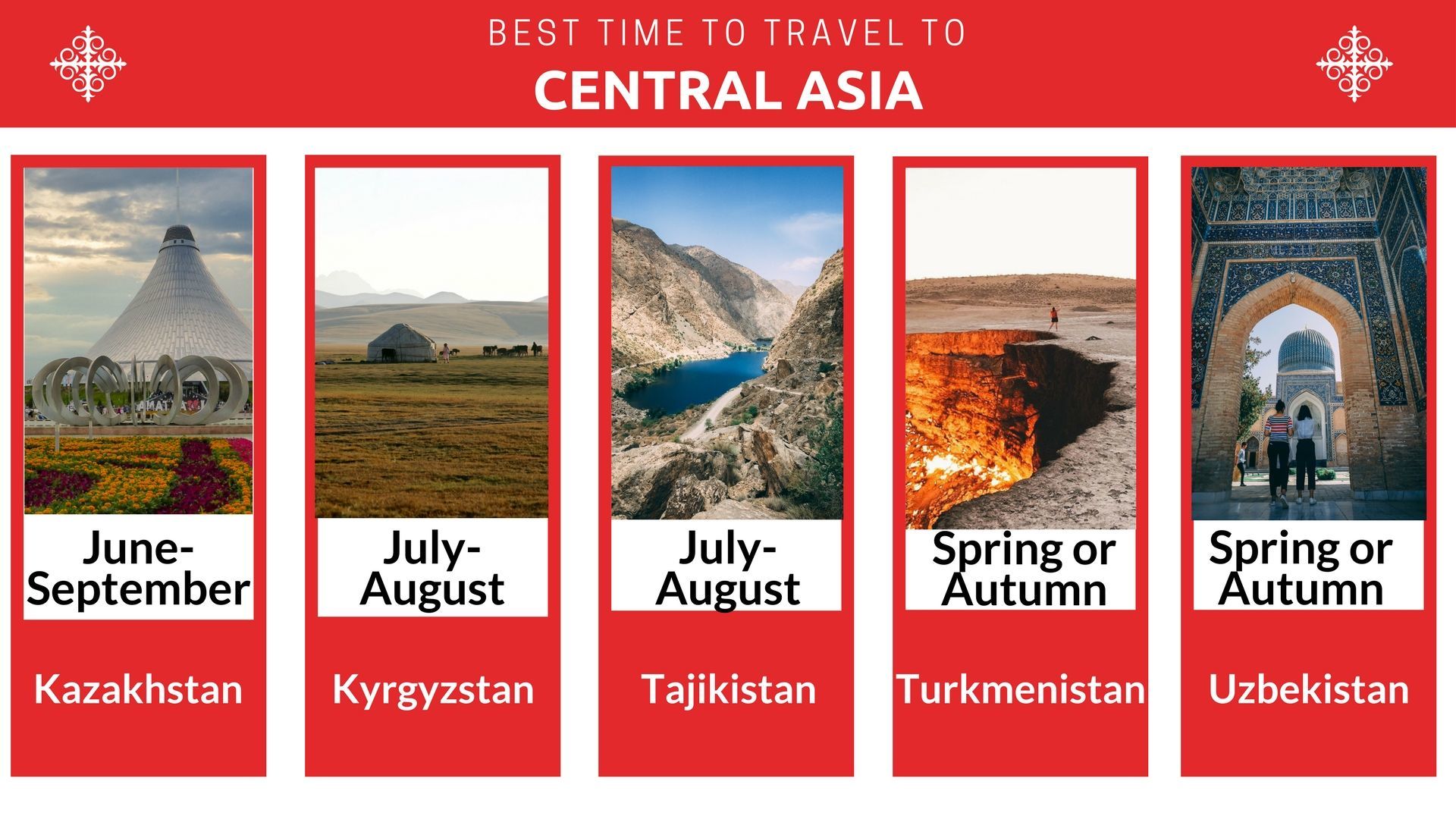
In our experience, the best time to visit all the Five Stans of Central Asia in one trip is during spring and autumn.
Central Asia has a continental climate, which means that the countries have cold winters and very hot, dry summers. April and May is a great time to visit when everything is green and blossoming. September and October are also great months, with fresh produce and fruits in the markets.
Visiting Central Asia in Spring
Spring in Central Asia feels like the whole region is waking up at once. Apricot trees burst into delicate pink and white blossoms, and even in the cities you can sense the change in the air. Early in March, tulips come into season, and on March 8, International Women’s Day, they are exchanged everywhere as the flower of choice. Just a few weeks later, on March 21, the entire region comes alive for Navruz, the ancient New Year festival, marked with music, dancing, and festive meals shared among family and friends. For these springtime celebrations, markets fill with flowers and the special green wheat sprouts grown for Navruz, symbols of renewal and abundance.
By late March, the lowlands of Uzbekistan, Turkmenistan, and southern Kazakhstan are already warming, while the mountains of Kyrgyzstan and Tajikistan remain crisp and cool. In the countryside, fields blaze with wild red poppies beneath the bright spring sun. The air is fresh, luminous, filled with that unmistakable sense of new beginnings.
As spring moves toward summer, the contrasts across the region grow sharper: by late May, Uzbekistan and Turkmenistan are already hot, while in Kyrgyzstan the first yurts are raised in the highland pastures, marking the start of the nomadic season in the mountains. Since all the Central Asian capitals lie below 1,000 meters above sea level, city visits quickly become hot in late spring and summer. For travelers focusing on the capitals and valleys, April and May are the ideal months, with pleasantly warm days, cool evenings, and only the occasional spring rain.
Visiting Central Asia in Autumn/Fall
Autumn in Central Asia brings a golden glow. The poplar and walnut trees turn yellow, villages are surrounded by orchards heavy with apples, and the markets overflow with giant watermelons and fragrant melons stacked high. Roadside sellers set up their stands, so even a simple drive turns into a feast. The sun is still warm during the day, but the evenings grow cooler, perfect for walking through fields touched by the season’s last light.
If you want to visit all the Five Stans together, we’ve expertly adjusted our itineraries to match the most favorable travel conditions in Spring, Summer, and in Fall/Autumn, so you can visit the mountains in Kyrgyzstan and Tajikistan, and enjoy pleasant weather in cities of Uzbekistan, Turkmenistan and Kazakhstan.
However, if you’re only going to one or two of the Five Stans, the best time to visit depends on where you’re going and what you want to do:
The best times to visit each of the Five Stans of Central Asia

Visit Kazakhstan in April to October for nature & culture
Spring is one of the best times to visit Kazakhstan, when the vast landscapes and cities both come alive. On the steppes, endless wild tulips, irises, and poppies bloom, while flocks of migratory birds cross the wide skies. In the cities, apricot and apple trees burst into blossom, parks fill with people enjoying the sunshine, and outdoor cafés reopen after the long winter. Festivals add to the atmosphere: Navruz on March 21 brings concerts, food stalls, and traditional celebrations to every town, while May holidays such as Labour Day and Victory Day fill the squares with parades and gatherings. With comfortable temperatures, clear mountain views around Almaty, and Astana shaking off its Siberian cold, spring offers the perfect mix of cultural life, natural beauty, and pleasant travel conditions.
Northern Kazakhstan, with the capital Astana, is very cold from October to March, when temperatures often drop far below zero and strong winds sweep across the steppe. Locals adapt with ease, moving daily life into warm cafés, theaters, and modern shopping centers connected by underground passages that protect against the chill. The cold also creates a unique atmosphere: Astana’s futuristic skyline looks striking against snow and ice, while winter festivals bring people outdoors for holiday markets and occasional ice-skating on the frozen river. For travelers, the season is harsh yet memorable, offering a glimpse of how Kazakhs embrace life in one of the world’s coldest capitals.
Read more: The best time to visit Kazakhstan

Visit Kyrgyzstan in July & August for trekking, April to October for culture
The highlight of the country are its mountains, some of which are at lower elevation (Issyk Kul Lake, Ala Archa National Park, Chon Kemin valley) and can be visited all year round. Other places are higher and can only be visited in summer. Lake Song Kul is accessible only from early June until the end of September.
The base camp of Lenin Peak in the south of the country is only accessible in July and August.
It’s important to note that although Kyrgyzstan retains its nomadic culture, there are no true nomads anymore – shepherds live in villages over the winter. So if you want to see the nomadic yurt lifestyle, you need to come in summer.
From around June 15 to September 15, nomadic families set up their yurts on the pastures of Song Kul Lake. The landscape shifts quickly with the season: early July is the greenest time, when the meadows are lush and full of wildflowers, while by August the grass turns golden, giving the lake a softer, autumnal glow. Since the lake lies at over 3,000 meters, there are no trees, and even in summer, the weather can be unpredictable, hail is possible, and night temperatures often drop close to zero. We always recommend bringing a light down jacket for the evenings; yurts can be heated if it gets especially cold. Occasionally, visitors may see traditional horse games or have them arranged for private groups, but for many, the real magic of Song Kul is its serenity, simply relaxing, watching herds of horses graze, and taking in the vast mountain views. By September, snow can already fall on the passes or even on the pastures themselves, making it the last chance of the year to stay in a yurt and experience this nomadic way of life.
Read more: The best time to visit Kyrgyzstan

Visit Tajikistan in July & August for trekking, April to October for culture
Another mountainous country, with similar conditions to Kyrgyzstan. The most popular places in the mountains such as lake Iskander Kul and the “Seven Lakes” can be visited well from April until October.
For the Pamir Mountains, May to September is a good time to visit.
In the Pamir Mountains of Tajikistan, travel is highly seasonal. Most roads, including the famous Pamir Highway, only reopen after the heavy winter snows in late May or June, and in some years remote passes remain blocked into early July. The scenery is always stark and dramatic, but it shifts subtly with the seasons: in early summer, snowmelt feeds rivers and valleys bloom with brief bursts of wildflowers; by late summer, the colors fade, villages turn to harvest, and the mountains look more austere. By October, snow often returns to the passes, and travel becomes uncertain again.
Many travelers find July and August the best months to visit: the roads are open, guesthouses and homestays are operating, and while the Pamirs remain rugged and mostly bare, the weather is relatively stable and the high-altitude air is at its clearest. The landscapes may not be lush with color, but that raw, austere beauty, endless mountains under a vast sky, is exactly what makes the Pamirs unforgettable.
Read more: The best time to visit Tajikistan

Visit Turkmenistan in April, May & September to October
A largely desert country. In winter it’s windy and cold, and in summer extremely hot and dry. The best time to travel is April/May and September/October. It’s important to note that with Turkmen National Day on 27 September, access to the country is usually restricted in the period from 20 September to 30 September. Turkmenistan is not a touristic country, so you can travel during the “peak season” and none of the sights will be crowded.
Turkmenistan is a largely desert country: winters are cold and windy, summers extremely hot and dry, so the best time to travel is April–May and September–October. It’s important to note that around Turkmen National Day on 27 September, access to the country is usually restricted between 20–30 September. We’ve seen travelers affected by this in the past, so we recommend avoiding this exact period or planning your trip for early September or after the first week of October.
There are subtle advantages to each season. In April and May, desert flowers bloom briefly after the spring rains, adding unexpected color to the otherwise stark landscapes, and evenings are pleasantly cool. By October, the heat of summer has faded, the days are comfortable, and nights around the Darvaza gas crater are crisp and atmospheric, perfect for walking around the flaming crater without the intense summer heat. Because Turkmenistan is not a tourist-heavy destination, you can travel during these peak seasons and still enjoy its sights without crowds.

Visit Uzbekistan in March to May & September to November
Uzbekistan is mostly desert with hot and dry summers. We find the best time to visit is during spring and autumn, especially April and October, if you are looking for pleasant temperatures in the 20s (Celsius). However, this is also the peak tourist season and sights in Bukhara, Samarkand and Khiva will be busy.
March and November are quieter months if you don’t mind cooler weather. In March you may also visit the colorful Navruz festival that is celebrated across Central Asia as the so-called “Persian New Year” around 21 March each year. It’s possible to visit Uzbekistan in winter, though temperatures often drop below 0 °C. While Khiva can feel rather deserted at this time of year, Tashkent, Bukhara, and Samarkand remain lively and are very rewarding to explore with far fewer international tourists around. Instead, you’ll mostly encounter local crowds going about daily life in bazaars, teahouses, and city streets. The crisp air, quieter atmosphere, and occasional snow give the monuments a magical quality, making winter a great option for travelers who value authenticity and solitude over tour groups.
In Uzbekistan, October is one of the busiest months of the year. While the cities and sights never feel overcrowded in the same way as major European destinations, many of the monuments are relatively small inside. For example, at the Gur Emir Mausoleum in Samarkand, just a couple of tour groups can make the interior feel packed, and in popular restaurants it’s common to find tables fully booked by different groups. The atmosphere can feel almost like a European summer holiday destination lively, but with far more international visitors than locals in the dining spots. Because of this, we recommend booking both hotels and restaurants well in advance if traveling in October.
Winter, by contrast, is quiet and atmospheric. With few tourists around, you’ll often have the monuments virtually to yourself. Snow occasionally dusts Samarkand, Bukhara, or Khiva, adding a magical touch to the turquoise domes. Life continues at a slower, more local rhythm: bazaars and teahouses filled with residents rather than tour groups. While temperatures can be cold, the trade-off is a more authentic glimpse of everyday life and the chance to experience Uzbekistan’s Silk Road cities in an entirely different, almost timeless way.
Read more: When to visit Uzbekistan
When to visit Central Asia: Month by month
January
The depths of winter. Much of Kazakhstan, Kyrgyzstan, and Tajikistan is locked in snow and bitterly cold, with limited accessibility to mountain areas. Cities like Tashkent, Samarkand, and Bukhara are quieter and still visitable, with clear skies and freezing nights. Turkmenistan and Uzbekistan are cold but dry, good for sightseeing without crowds.
February
Still winter across the region, though daylight hours start to stretch. Ski resorts near Almaty (Kazakhstan) and Karakol (Kyrgyzstan) are in season. Urban travel in Uzbekistan and Turkmenistan is possible, but expect chilly conditions. Rural roads in Tajikistan and Kyrgyzstan remain closed.
March
Spring begins. Temperatures rise and markets fill with early produce. Navruz, the Persian New Year (around 21 March), is celebrated across all five countries with festivals, special foods, and public holidays. Uzbekistan’s cities are lively, though still cool; Kazakhstan’s steppes begin to thaw; Kyrgyzstan and Tajikistan are still mostly inaccessible in the highlands.
April
One of the best months to visit. Kazakhstan’s steppes blossom with wildflowers. Uzbekistan and Turkmenistan enjoy comfortable mid-20s°C temperatures, perfect for city tours. Mountain foothills in Kyrgyzstan and Tajikistan open up for hiking, though high passes remain snowbound.
May
Ideal weather across the region. Uzbekistan’s Silk Road cities are at their most pleasant, with peak tourist numbers arriving. Turkmenistan is still manageable before the summer heat sets in. Lower mountain valleys in Kyrgyzstan and Tajikistan are green and accessible, but high-altitude lakes like Song Kul remain closed.
June
Summer begins. Cities in Uzbekistan and Turkmenistan heat up into the 30s°C, while Kazakhstan’s southern regions are warm but bearable. Kyrgyzstan’s Song Kul Lake opens as herders set up yurts, and Tajikistan’s Pamir Highway becomes fully accessible. Trekkers start arriving in the mountains.
July
Peak summer heat. Uzbekistan and Turkmenistan can be punishingly hot (often over 40°C), while Kazakhstan’s northern steppes are warm and pleasant. Kyrgyzstan and Tajikistan are in prime trekking season, with alpine lakes accessible and yurts dotting summer pastures. Lenin Peak and other high-altitude routes open fully.
August
Similar to July: hot and dry in the deserts, perfect for trekking in the mountains. Kyrgyzstan hosts festivals and horse games in mountain pastures. Tourist numbers are high across the region, especially in Uzbekistan’s Silk Road cities and Kyrgyzstan’s trekking hubs.
September
One of the best months overall. Cooler temperatures return to the cities, harvest season fills markets with grapes, melons, and pomegranates, and mountain routes remain open. In Turkmenistan, travel may be restricted in the last ten days due to Independence Day celebrations.
October
Golden autumn landscapes across Kazakhstan and Kyrgyzstan, with crisp air in the mountains. Uzbekistan’s peak tourist season continues with comfortable weather in Samarkand and Bukhara. Tajikistan’s mountain roads begin to close toward the end of the month as snow returns.
November
Tourist numbers fall sharply. Cities in Uzbekistan and Turkmenistan are cool but still visitable, with fewer crowds. Mountain regions become inaccessible as snow sets in. Good for cultural travellers who don’t mind cooler weather and want to avoid peak-season prices.
December
Deep winter returns. Harsh cold in Kazakhstan, Kyrgyzstan, and Tajikistan makes mountain travel unrealistic. Uzbekistan’s cities remain open, with quiet streets and festive markets. Skiing in Kazakhstan and Kyrgyzstan resumes, but this is a low season for cultural touring.
At a glance:
| Month | Summary | Kazakhstan | Kyrgyzstan | Tajikistan | Turkmenistan | Uzbekistan |
| Jan | Deep winter, harsh cold, low tourism | Bitter cold; skiing near Almaty | Skiing at Karakol; mountains closed | Inaccessible highlands | Cold, dry; desert winds | Cold, dry cities; quiet tourism |
| Feb | Still winter, daylight increasing | Ski resorts in season | Skiing continues; roads closed | Pamirs inaccessible | Chilly but dry | Cultural sites open but cold |
| Mar | Spring starts; Navruz festival | Steppes thawing | Foothills warming | Low valleys open | Cool; Navruz celebrations | Navruz celebrated; cities lively |
| Apr | One of the best months to visit | Steppes bloom | Foothill hikes possible | Seven Lakes & Iskander Kul accessible | Comfortable weather | Ideal for Silk Road cities |
| May | Pleasant, green landscapes | Warm, blossoming | Valleys open; high lakes closed | Good cultural touring | Manageable before summer heat | Peak season; busy cities |
| Jun | Summer heat in lowlands | Warm in south | Song Kul opens; yurts appear | Pamir Highway opens | Heating up | Hot cities; still visitable |
| Jul | Hottest in deserts; peak trekking | Warm steppes | Prime trekking; Lenin Peak base camp open | Peak trekking in Pamirs | Extremely hot, >40°C | Very hot, cities challenging |
| Aug | Hot, dry cities; mountains at best | Pleasant north, hot south | Festivals, horse games | Treks still open | Scorching heat | Still very hot; crowded |
| Sep | Harvest season; best all-round month | Comfortable temps | Treks ongoing, pastures lively | Roads still open | Travel restricted late Sept (Nat. Day) | Peak season, markets full of fruit |
| Oct | Golden autumn, crisp air | Autumn colours | Lower treks; high passes closing | Mountain roads close late month | Cool, comfortable | Ideal; peak tourist numbers |
| Nov | Cooling rapidly; tourism slows | Cold north, cool south | Trekking season ends | Mountain access closed | Cooler, dry | Quieter cities; off-peak travel |
| Dec | Winter returns | Freezing temps | Ski season begins | Snowbound | Cold, quiet | Chilly but cities open |
Geography & climate of Central Asia
Central Asia has a very diverse landscape varying from large deserts to high mountains over 7000 meters high peaks.
Uzbekistan’s landscape is mostly shaped by the Kyzylkum desert which is about 298,000 km².
Turkmenistan’s landscape is shaped by the Karakum desert which is about 350,000 km² and occupies 3/4th of the country.
Kazakhstan’s territory is mostly covered by steppes and in the south near Almaty region by Tian Shan mountains.
Kyrgyzstan is a mountainous country and most of its territory lay above 1500 meters.
Most of Tajikistan’s territory is covered by Pamir mountains and over half of the country is located above 3000 meters.
In the mountains of Kyrgyzstan and Tajikistan, the temperature is very pleasant in summer. Deserts and the steppe get very hot in summer therefore, Uzbekistan and Turkmenistan are best to visit in Spring or Autumn.
When to visit the cities of Central Asia
In almost all major cities of Central Asia, summer temperatures can soar above 40°C. For travelers focusing on city visits, spring and autumn are the most comfortable seasons. Summer, however, has its own rhythm: in cities like Tashkent, Almaty, and Bishkek, mornings are ideal for outdoor sightseeing before the heat intensifies. By midday, life slows down, just as locals do, travelers can retreat into air-conditioned cafés, hotels, museums, and shopping centers, which have become a hallmark of these modern cities. In the evenings, the streets come alive again: families stroll through shaded parks, open-air bazaars and food stalls bustle with activity, and cultural events or concerts often take place once the sun sets. The climate is hot but dry, and with a slower pace and thoughtful planning, even the peak of summer can be an enjoyable time to experience the cities.
If you want to visit all the Five Stans together, we’ve expertly adjusted our itineraries to match the most favorable travel conditions in Spring, Summer, and in Fall/Autumn, so you can visit the mountains in Kyrgyzstan and Tajikistan, and enjoy pleasant weather in cities of Uzbekistan, Turkmenistan and Kazakhstan.