Silk Road Tour in Central Asia

Historical Cities of Central Asia

Chase a common thread of culture through the diverse Silk Road cities of Central Asia.

Days

18

Price from:

$6720

Briefing

Comfort level:

Physical rating:

Group size: Max 12

Countries: KazakhstanKyrgyzstanTajikistanUzbekistanTurkmenistan

Route:

  • Ashgabat
  • Merv
  • Khiva
  • Samarkand
  • Dushanbe
  • Almaty
  • Bishkek

Themes: Cultural Tours

Journey in style through the “Five Stans” of Central Asia along the Great Silk Road. Stay in the region’s finest hotels as our expert guides reveal UNESCO-listed cities, from the majestic Islamic masterpieces of Samarkand, Bukhara, and Khiva to the grand Soviet-era capitals. In 18 unforgettable days, experience a seamless blend of cultural discovery, comfort, and timeless elegance across one of the world’s most fascinating regions.

highlights

  • Travel in comfort along the legendary Silk Road through all Five Stans of Central Asia
  • Stay in handpicked 4- and 5-star hotels combining local charm with modern luxury
  • Explore three of the region’s capitals and trace their transformation through time
  • Discover the architectural masterpieces of Samarkand, Bukhara, and Khiva — all UNESCO World Heritage Sites
  • Step into history at the ancient ruins of Merv and the serene beauty of Iskander Kul Lake
  • Experience authentic Central Asian culture — from vibrant bazaars to Kyrgyz horse games and eagle hunters

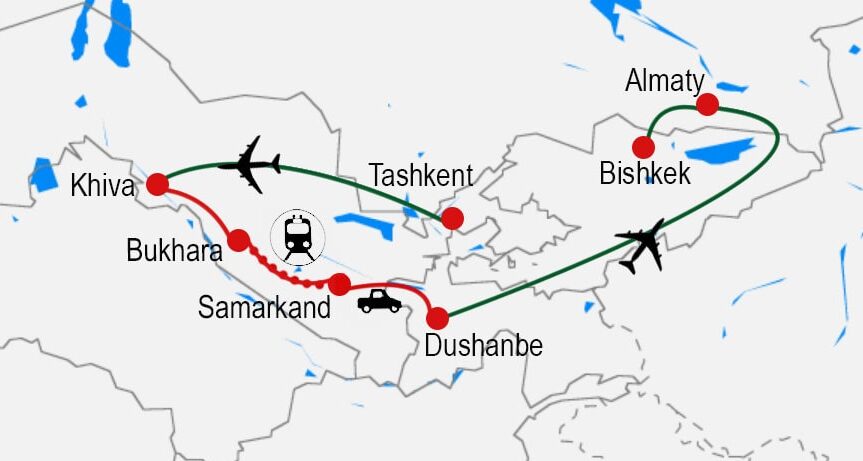
ITINERARY & MAP

Ashgabat Tour

Welcome to Turkmenistan! Most flights arrive very early in the morning (Turkish Airlines from Istanbul, FlyDubai/ Emirates from Dubai). You will get your visa on arrival with our pre-approved invitation letter. Transfer to the hotel and early check-in with breakfast. Have some rest.

At 11:00 am, meet your tour leader and fellow travelers for the welcome briefing, followed by lunch.

In the afternoon, we will have an orientation tour of the Turkmen capital, Ashgabat, literally translated as “city of love”, and famous for its white marble architecture. We will explore the city’s most striking structures. We will stop at such impressive buildings as the Monument of Independence (resembling a white-marble “Eiffel Tower” located in a beautiful park), a rocket-like Arch of Neutrality, “Palace of Happiness” (the official name for the wedding registration office) shaped like a 3D octagon star, the National Memory complex consisting of an eternal fire rising to the skies and the Earthquake Memorial (topped by a sculpture of a large bull holding the Earth on its horns).

Welcome dinner with a nice view of the city.

Hotel Diwan 5* or similar

Breakfast at the hotel. We start our touring today with a visit to the ruins of the Old Nisa fortress (UNESCO World Heritage Site), the earliest of the Parthian Empire capitals. Erected on the top of an irregular pentagon hill at the foot of the Kopet-Dag Mountains, on the atmospheric outskirts of the city, Old Nisa is a beautiful landmark. 14 ha in size, the fort accommodates two semi-excavated complexes of the Parthian period (III c. BC – III c. AD), designated as a royal residence and temple complex. Abandoned at the end of the Parthian period, Old Nisa transferred its functions to New Nisa, another archaeological site located a few kilometers to the west, an important medieval Silk Road city. After sightseeing at Old Nisa, we drive to Geokdepe village to visit the Geokdepe stud-farm to see the magnificent Ahal Teke horses. Ride, feed, and photograph these unique creatures, known for their exceptional speed and ancient heritage. Geokdepe was also the site of a fierce battle between the Russian Empire and the Teke tribe during Russia’s conquest of Central Asia. We will have a traditional Turkmen lunch at the farm. On the way back to Ashgabat, we stop at Kipchak village to visit a complex of the biggest mosque in Turkmenistan and the family mausoleum of the first President, Turkmenbashi. Back in Ashgabat, we complete the city tour with a visit to the National Museum of History (more than 327.000 objects on display) and observe an exclusive collection of ancient artifacts from different historical and archeological sites of Turkmenistan, such as Old Nisa, Ancient Merv, and others.

Dinner with a Turkmen folklore show.

Hotel Diwan 5* or similar

Turkmenistan Tour - Ancient Merv Kiz Kala

Today, we depart from Ashgabat and drive on the new highway to Mary (360 km, c. 4h). We will then drive to the nearby ruins of Ancient Merv (UNESCO World Heritage Site). One of the major archaeological sites of Central Asia, Merv played an important part in the development of the Silk Road for more than 2000 years. Within the limits of the archaeological park, which is 1200 ha, we will have a chance to observe all constituent parts of the “wandering city”. A series of adjacent cities, which can be roughly divided into the ancient (Erk Kala and Gyaur Kala), the medieval (Sultan Kala with its suburbs), and post-medieval (Abdulla-Khan Kala and Bayram-Ali-Khan Kala), appeared over time as a token of the natural progress of the city from initial stages of its existence to a more advanced level. Besides remnants of the cities of Merv, we will visit the VI-IX cc. AD forts of Big and Little Kyz-Kalas, excellent examples of the so-called corrugated Koshks; the splendid XII c. mausoleums of Sultan Sanjar and Muhammed ibn-Zeyd, demonstrating exquisite Seljuk period brickwork and architectural décor. Later, we head back to Mary to visit the local History Museum, presenting a wide array of archaeological finds as well as interesting ethnographic displays. In the evening, after dinner, we fly back to Ashgabat (9:00 pm – 9:40 pm).

Hotel Diwan 5* or similar

Catch a flight from Ashgabat to Dashoguz at 9:55 am (50-minute flight). We will have a Turkmen farewell lunch in Dashoguz at a local restaurant. In the afternoon, we transfer to the nearby border with Uzbekistan. Say goodbye to your Turkmen guide. Cross the border on foot, and transfer for another hour to Khiva. Please note that the crossing may take a couple of hours. Check in at the comfortable hotel, located five minutes’ driving distance from the Old Town. Dinner in the Old Town, known as Ichan Kala.

Hotel Farovon 4* or similar

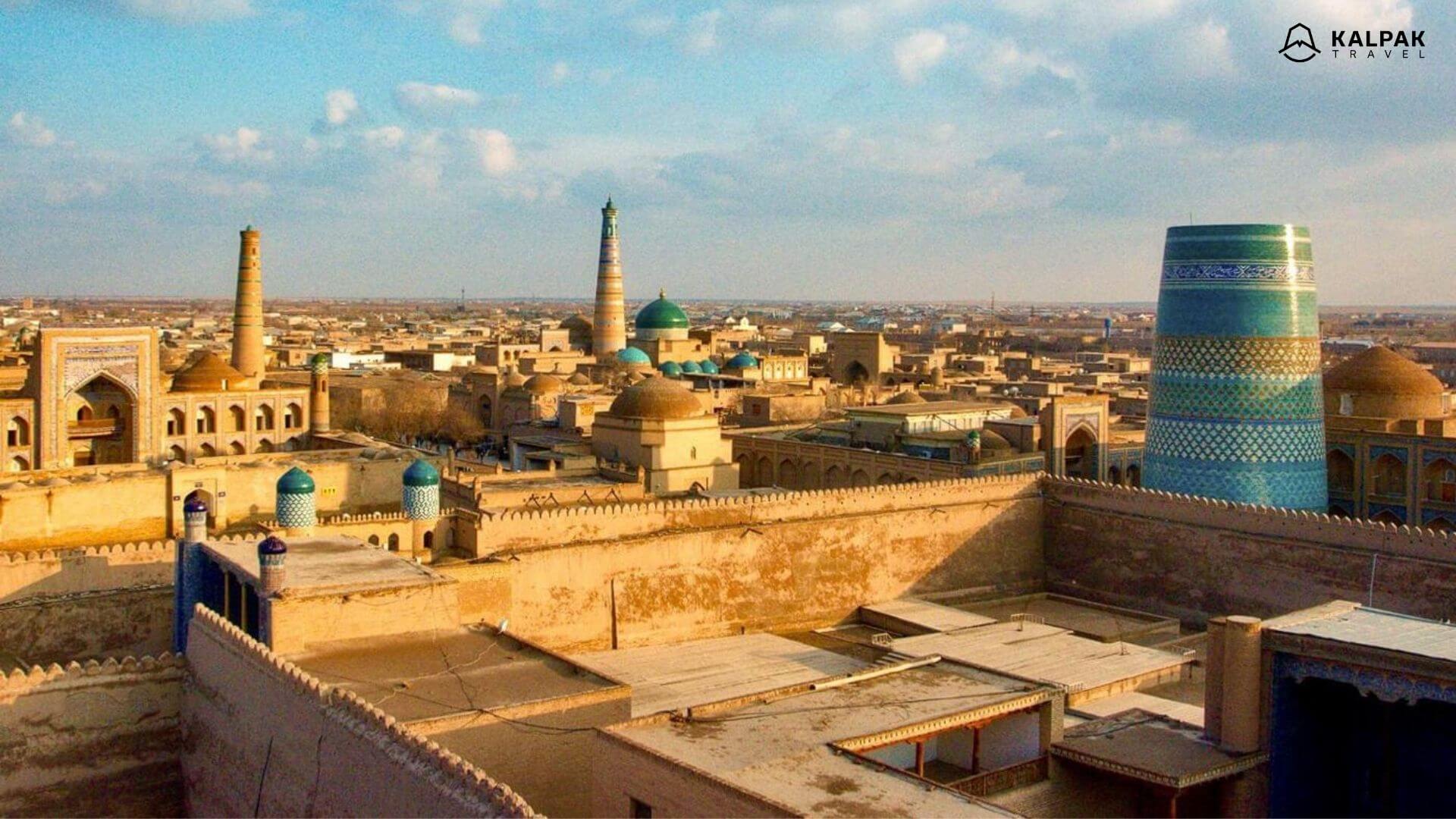
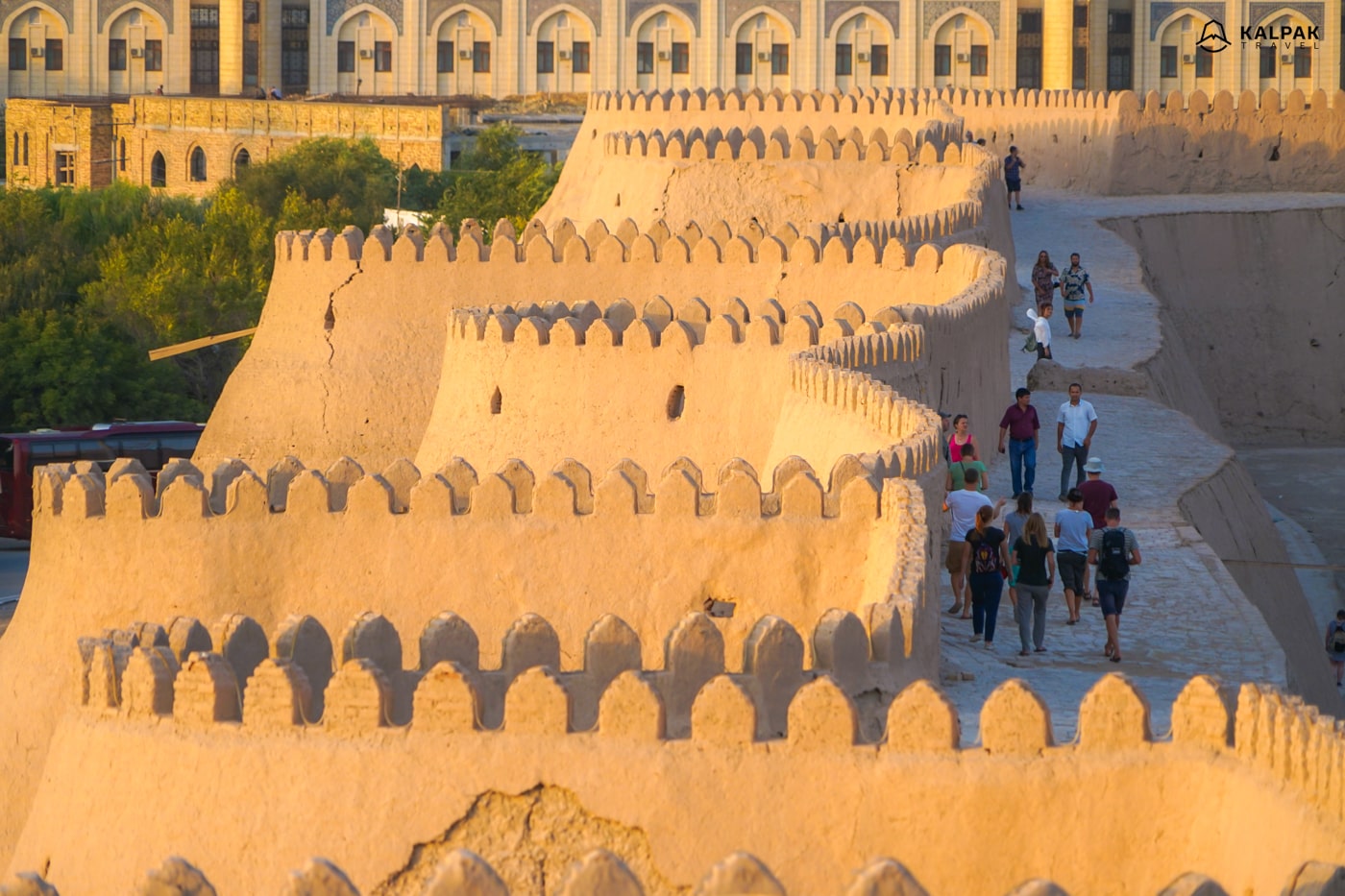
A jewel of desert architecture, Khiva is one of the most important centers of ancient Khorezm. Locals believe that Shem, son of Noah, founded the city when he discovered a freshwater spring in the middle of this vast desert. Archeologists believe the city was founded some 2,500 years ago. Today, Khiva is the most architecturally intact and tightly packed of Central Asia’s Silk Road cities. Its intense blue-and-green tile work ranks as some of the most ornate in Uzbekistan, and the entirety of the Ichan-Kala – the inner city – is listed as a UNESCO World Heritage Site. It also has the feel of a movie set or an open-air museum. Khiva is full of incredible architecture, and today we will get the chance to see it all. The focus of our tour is the walled Ichan-Kala, within which more than 60 historic monuments and hundreds of centuries-old houses are preserved. You will also have time on your own to wander around this fabled town.

Hotel Farovon 4* or similar

Our short flight to Bukhara departs only at 3:50 pm from Urgench Airport (30 minutes’ ride from Khiva). We will spend more time in Khiva in the morning. In the afternoon, transfer to the airport to catch the short flight to Bukhara. We plan ot arrive at Bukhara Airport at 4:10 pm. It’s just a 10-minute ride from the airport to the old town of Bukhara, where we check in at a beautiful boutique-style hotel. Dinner in a nice local restaurant in the old town.

Hotel Alexia Suite 4* or similar

Bukhara Uzbekistan tour highlights

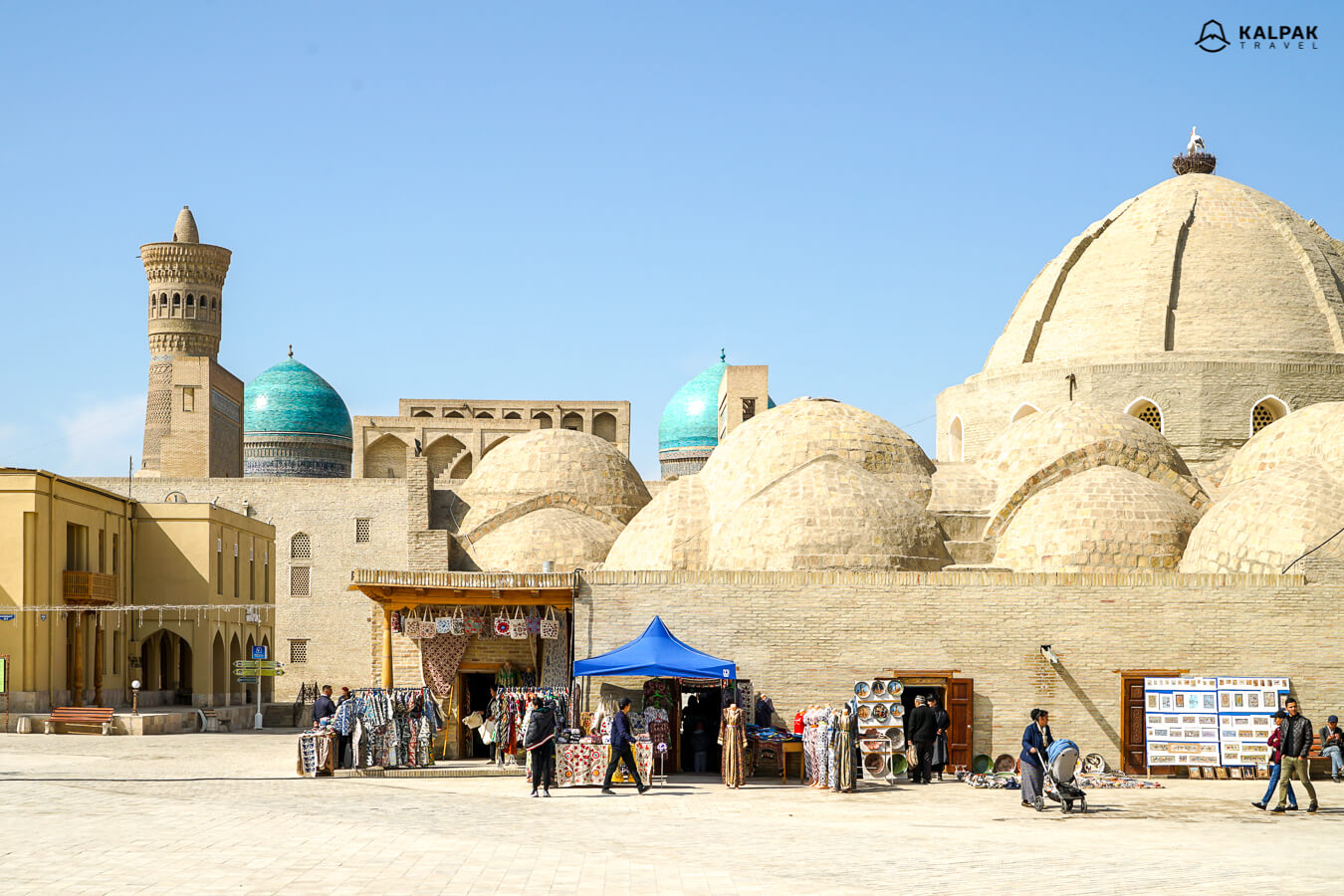
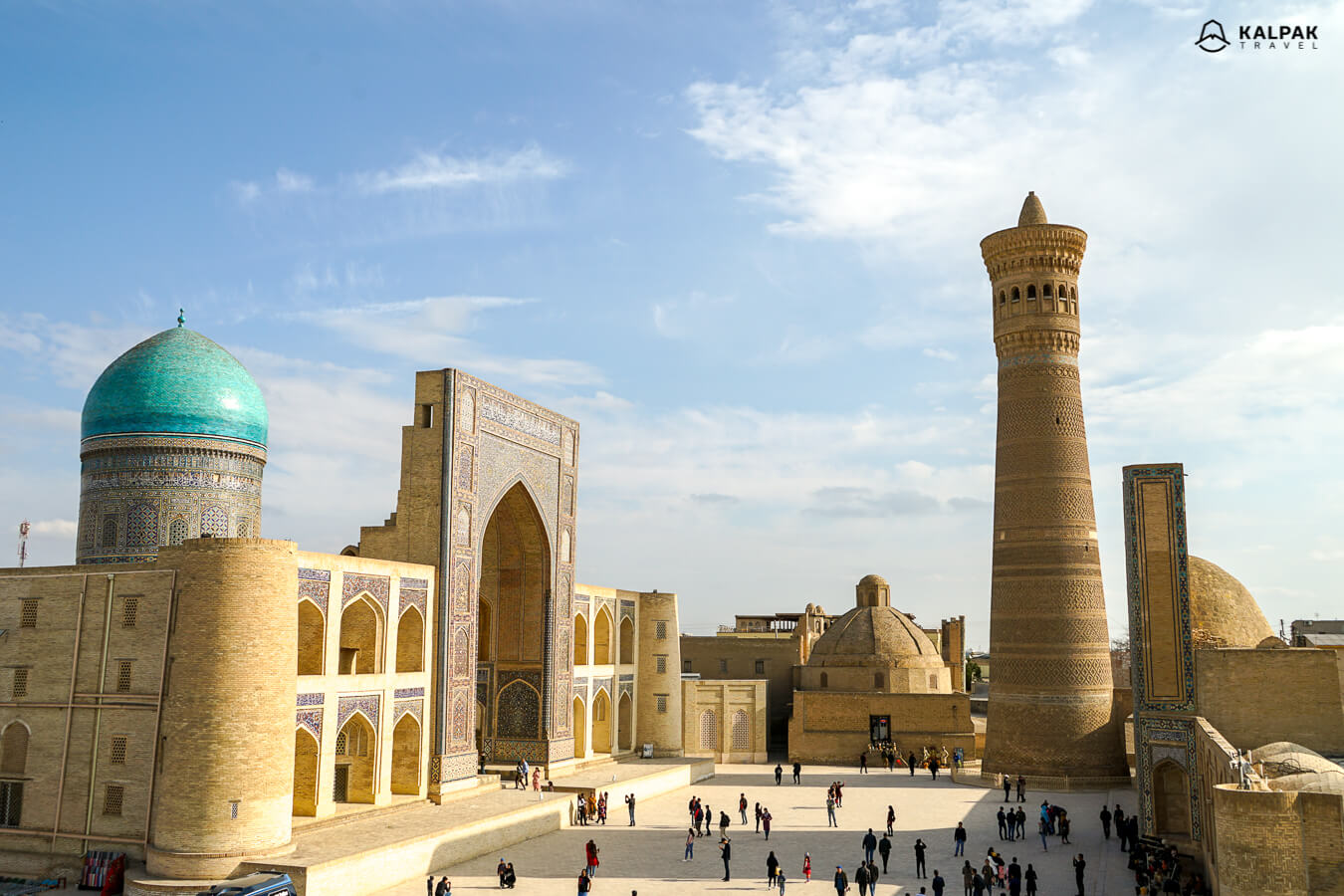
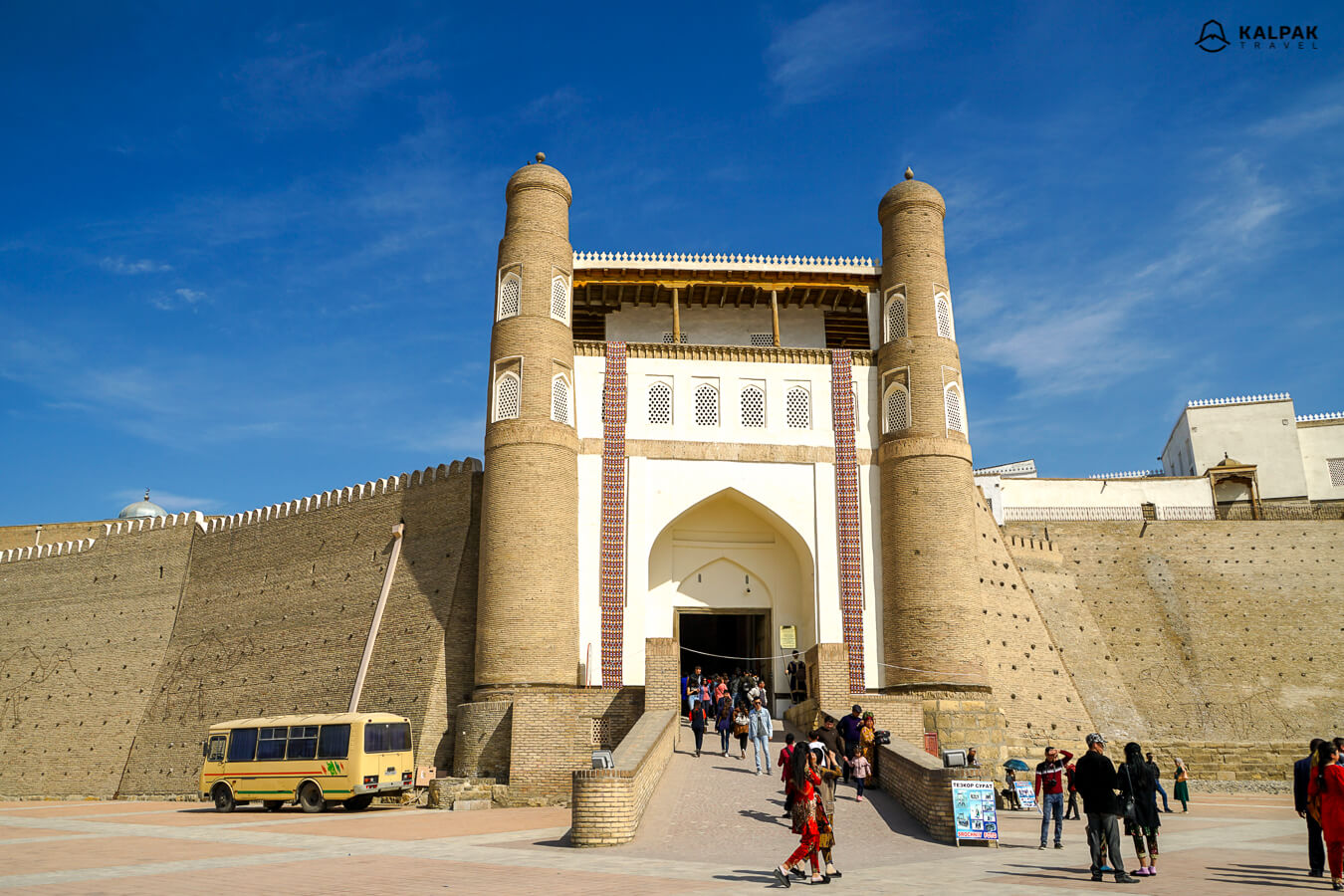
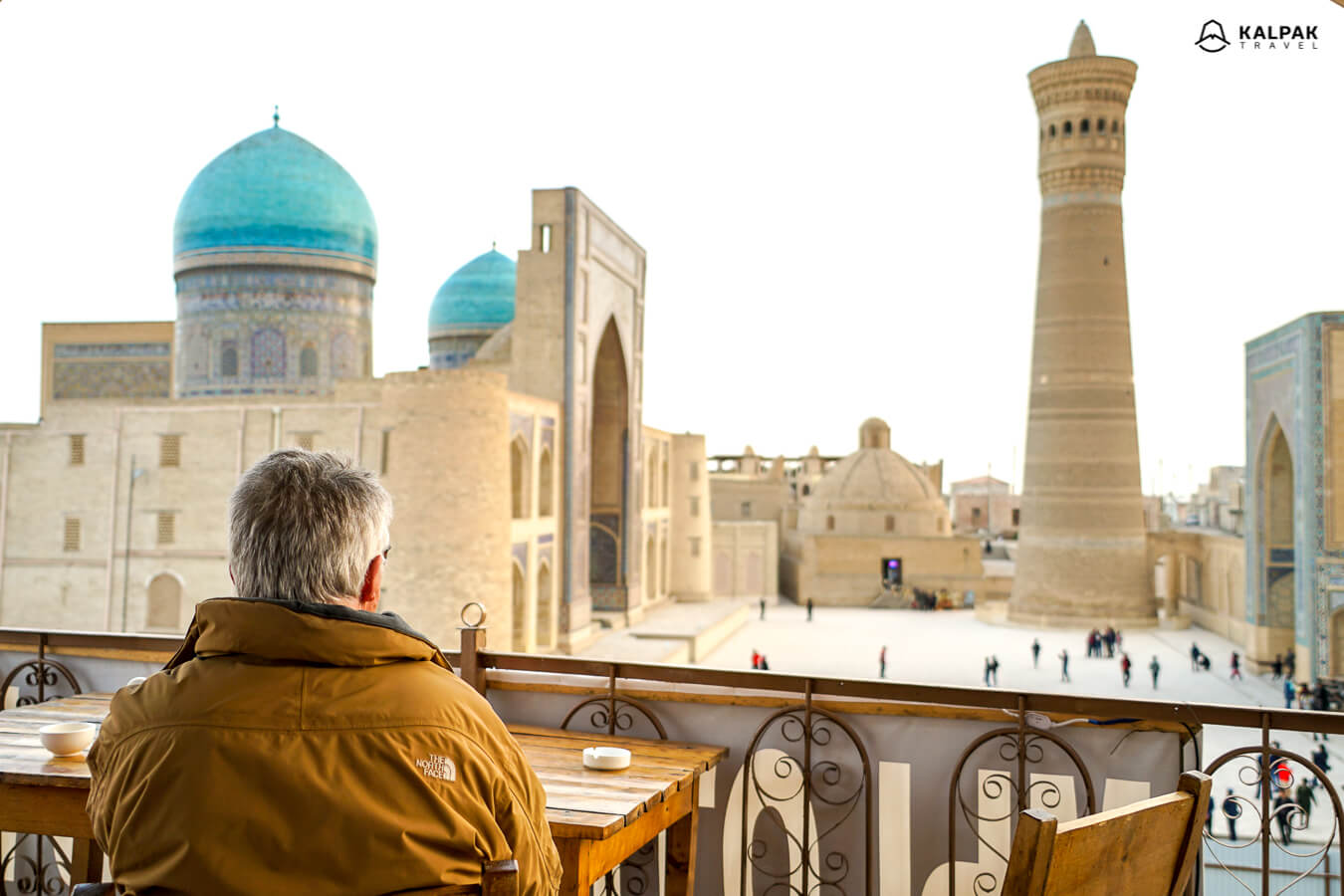
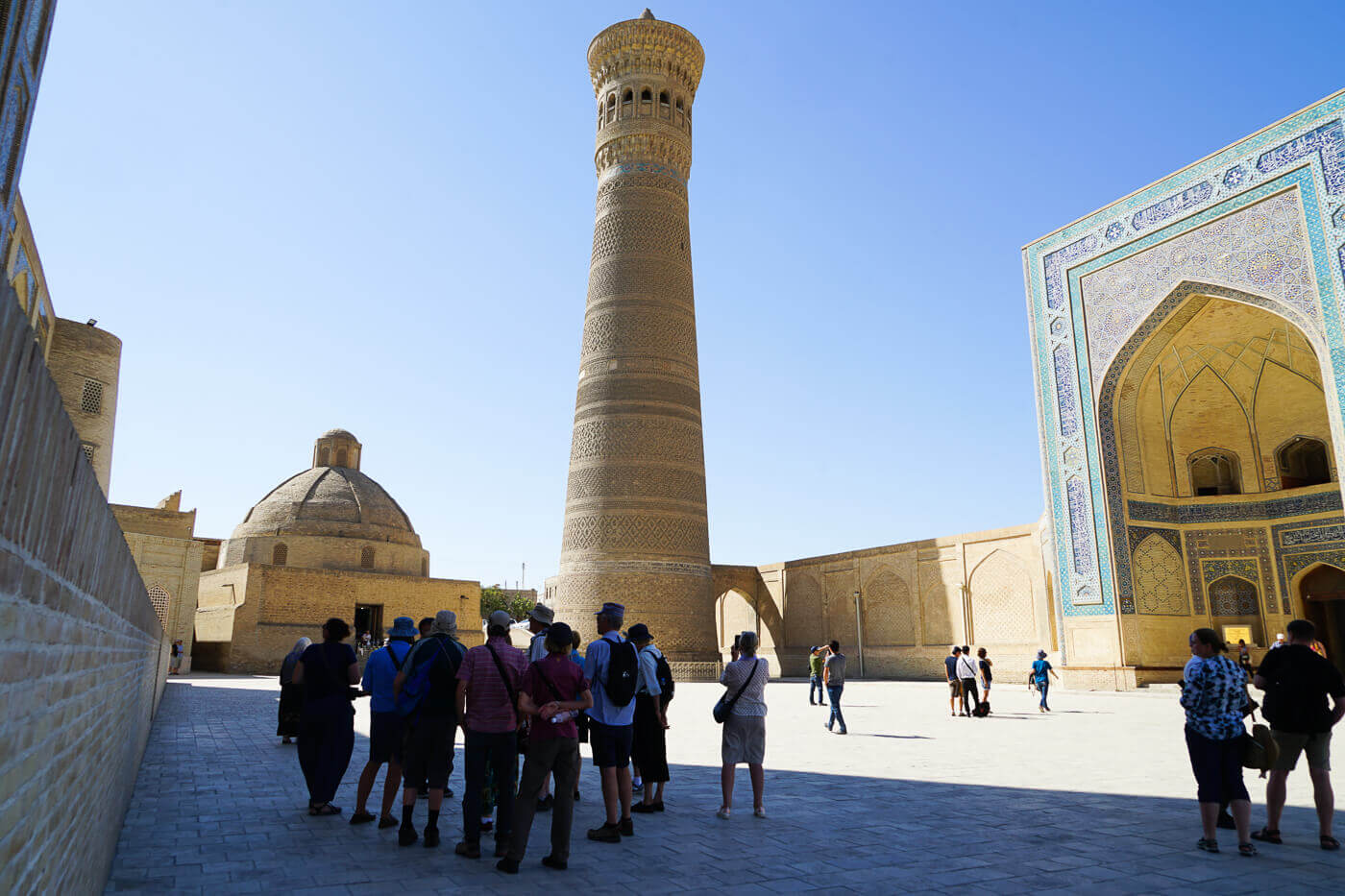
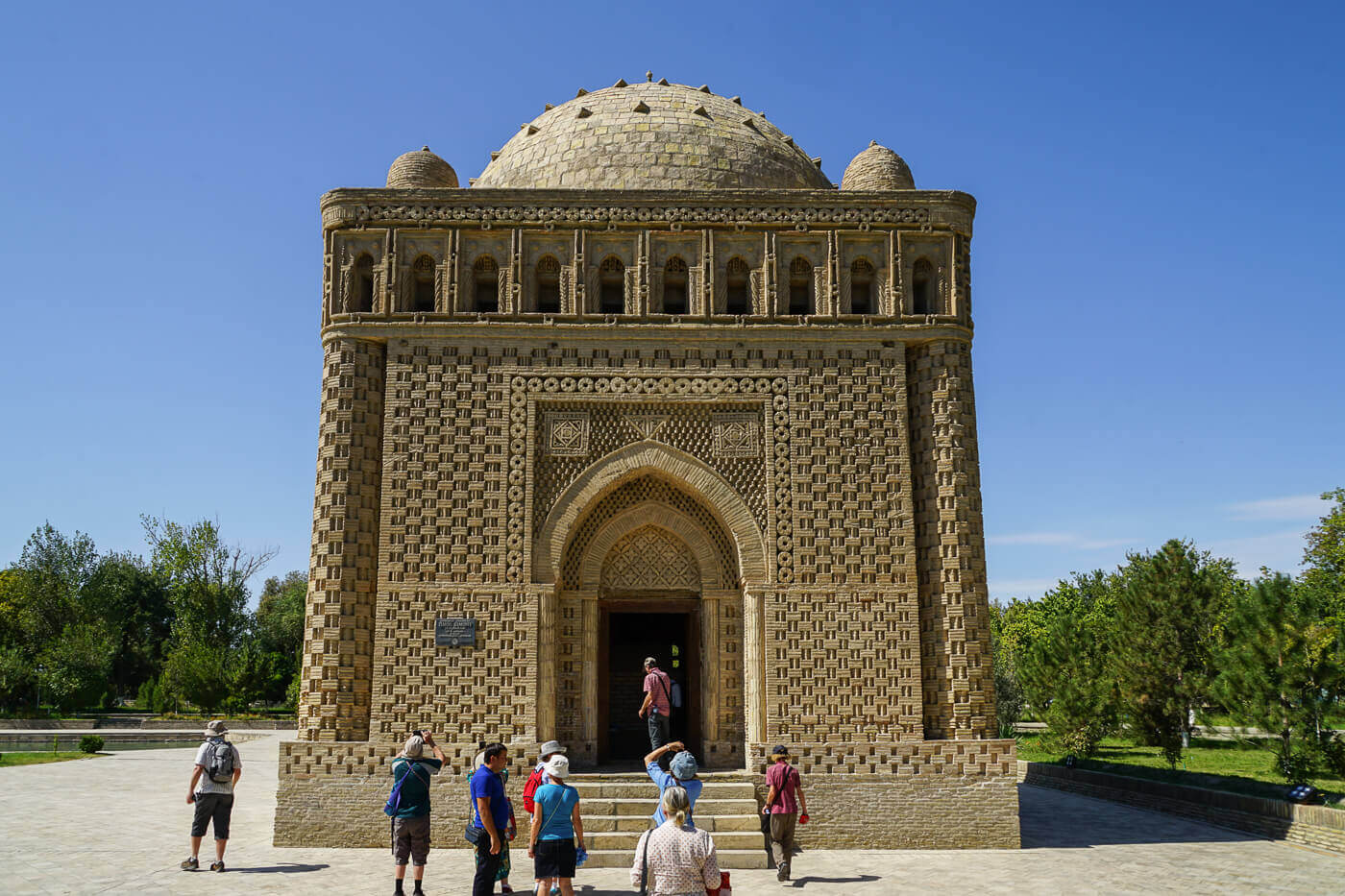
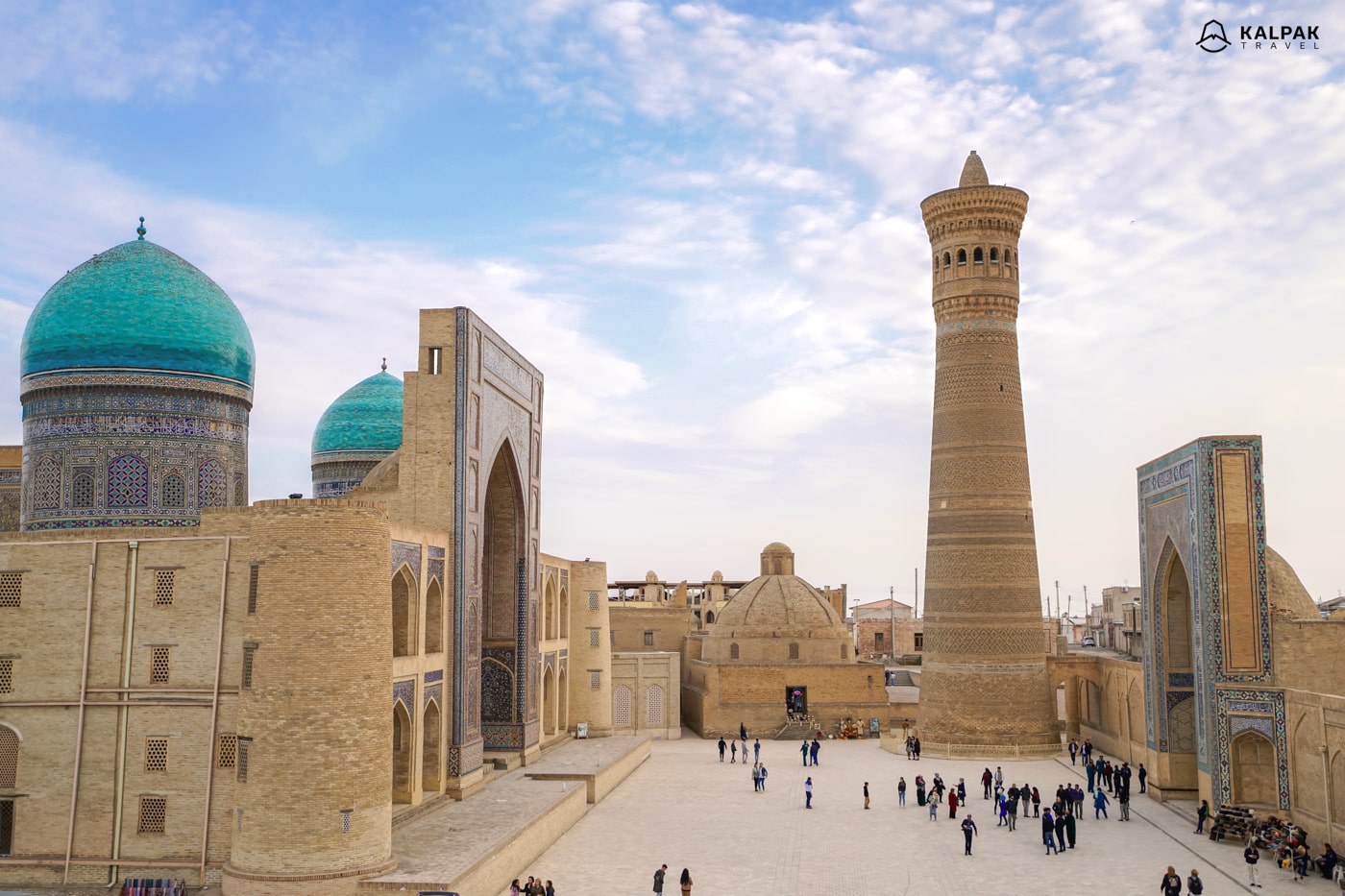
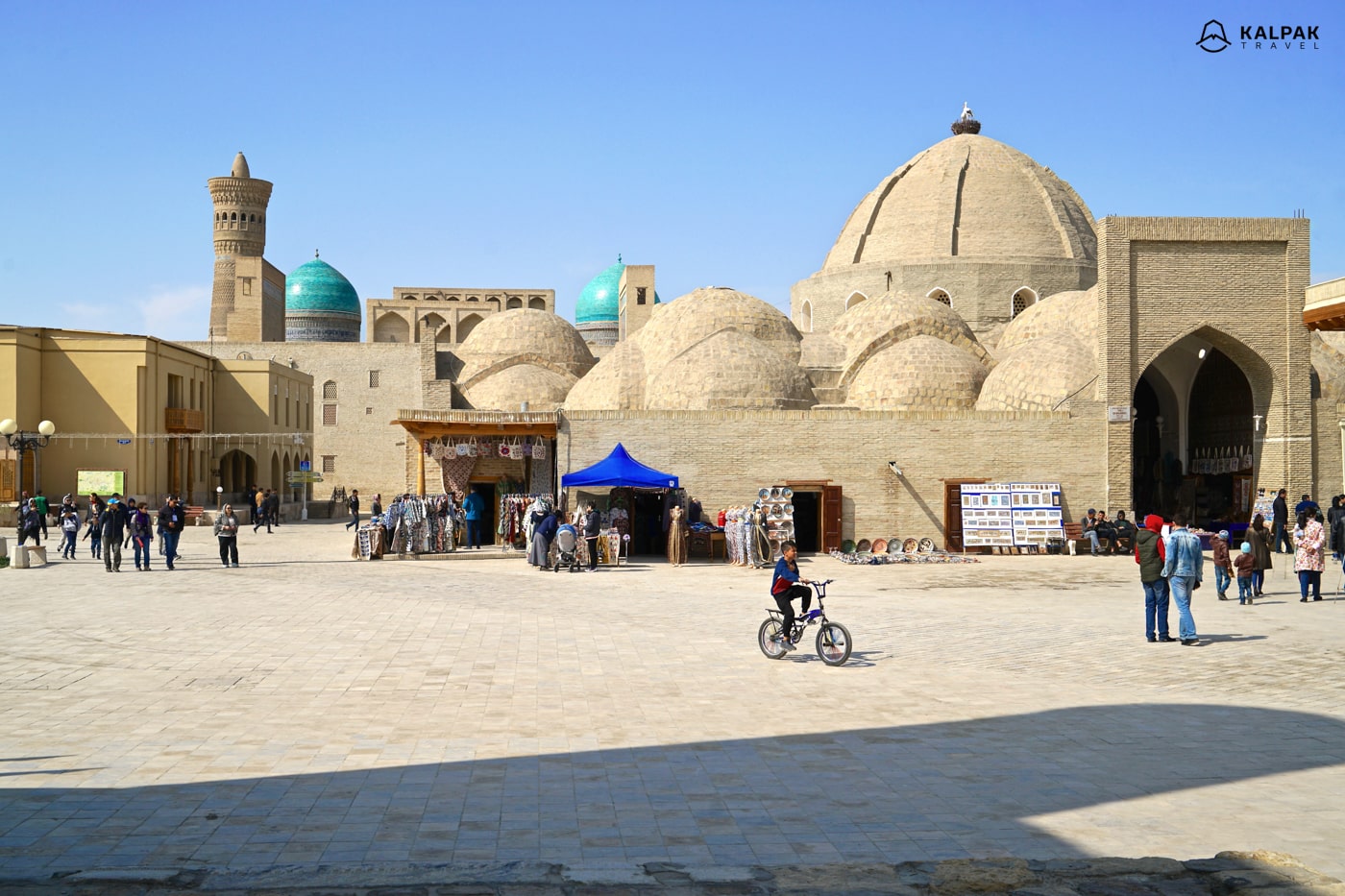
The city’s very name – Bukhara – conjures up images of the exotic Orient. For centuries, it was an important trading post and center of scholarship. The Old City has been well preserved and is crammed full of minarets, mosques, and madrassas. Its once notorious canals and pools, the source of many epidemics, have now been drained, but the most famous, Lyabi-Hauz, is still there. Today, it’s an oasis shaded by mulberry trees in the heart of the city. Your guide will show you Bukhara’s unmissable sights, and you can soak up the atmosphere wandering through the labyrinthine alleyways. Highlights of today’s walking tour in Bukhara include the Poi Kalon complex, the Ark Fortress, Bolo Hauz Mosque, the Ayub Mausoleum and spring, the bazaars inside Bukhara’s unique trading domes, and the Samanid Mausoleum. Bukhara is also a great city to see artisans at work.

Hotel Alexia Suite 4* or similar

Bukhara in Uzbekistan

Today morning we will visit a couple more sights near Bukhara. First, we visit the Mausoleum of Naqshbandi, 15 km outside the city center. There are many orders in Sufism, all of which have been represented at different times in what is now Uzbekistan. The Naqshbandiyya order has a great and long-lasting influence, and the memorial place is still a popular place of pilgrimage for Sufis. From here, we will visit the summer residence of the last Emir of Bukhara. In Persian, it is called Sitorai Mokhi Hossa, “the place where the moon meets the stars”. Return to Bukhara for lunch.

Our high-speed train departs from Bukhara at 3:00 pm and we arrive in Samarkand at 4:45 pm. Transfer to the hotel for check-in and dinner. After dinner, we may visit Registan Square for an evening view of the magnificent madrasahs.

Hotel Zarafshan Parkside 4* or similar.

Uzbekistan tour

Sublime Samarkand was the capital of the Timurid Empire; Timur was one of history’s greatest conquerors. His vast empire rivaled any, stretching across the Eurasian steppe. He ruled his kingdom with an iron fist, whilst at the same time patronizing the arts and literature. Much of the architectural heritage from this period has been preserved, allowing us to see how the city might have been at the peak of Timur’s power.
We will start the city tour with a visit to Bibi-Khanum Mosque, a structure that legend says was gifted to Timur by one of his wives. We will also have some time to explore Siyob Bzaar.
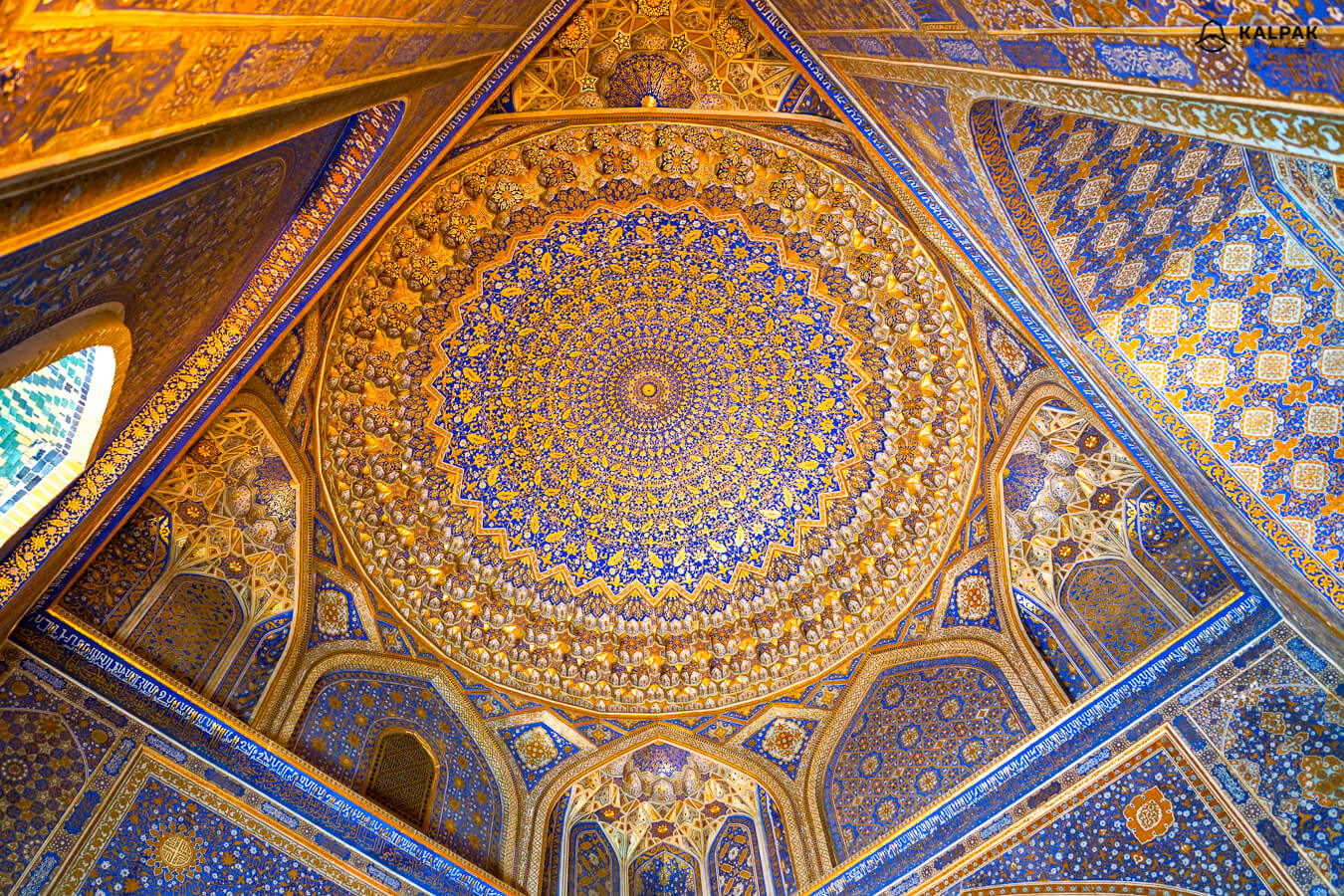
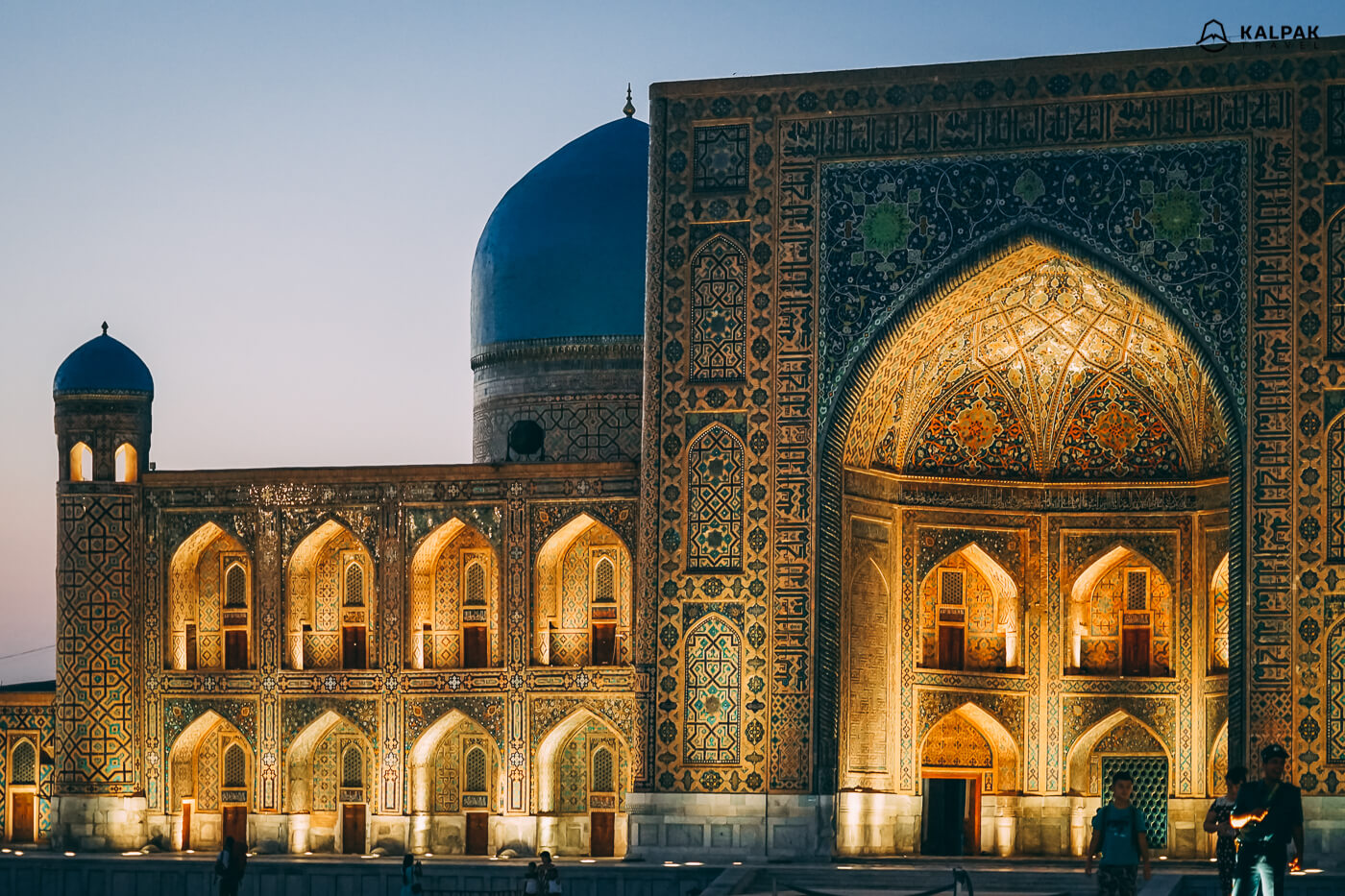
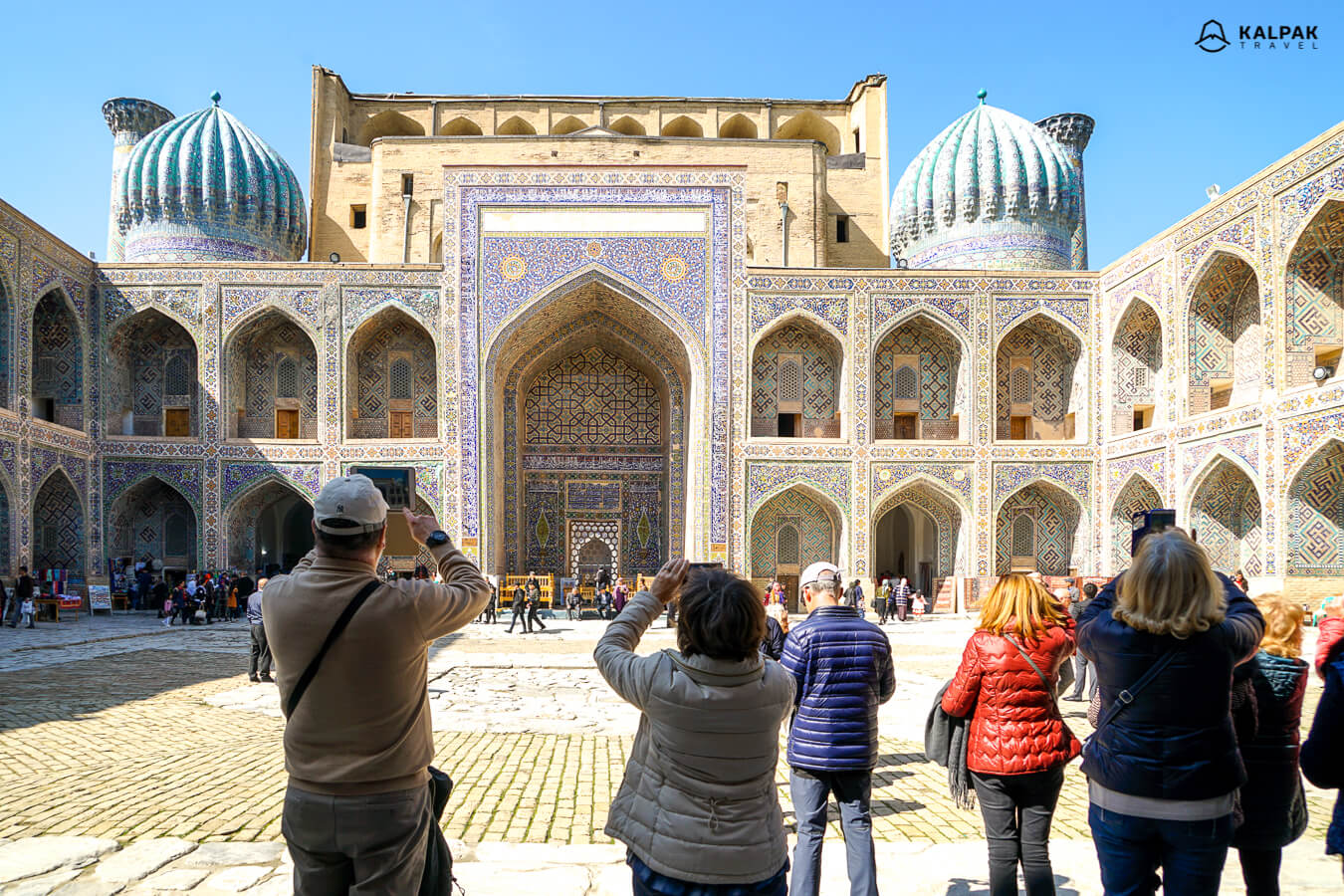
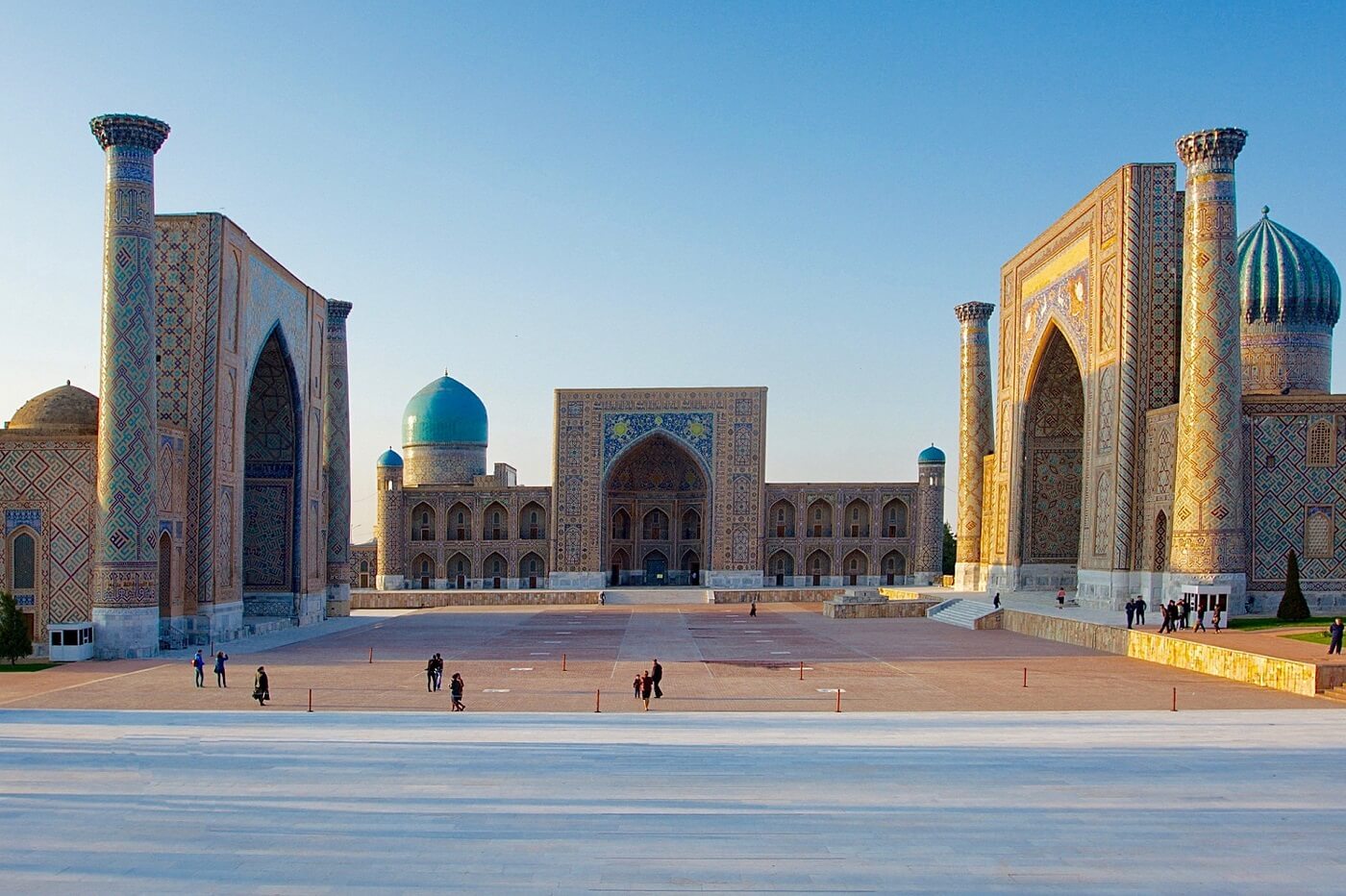
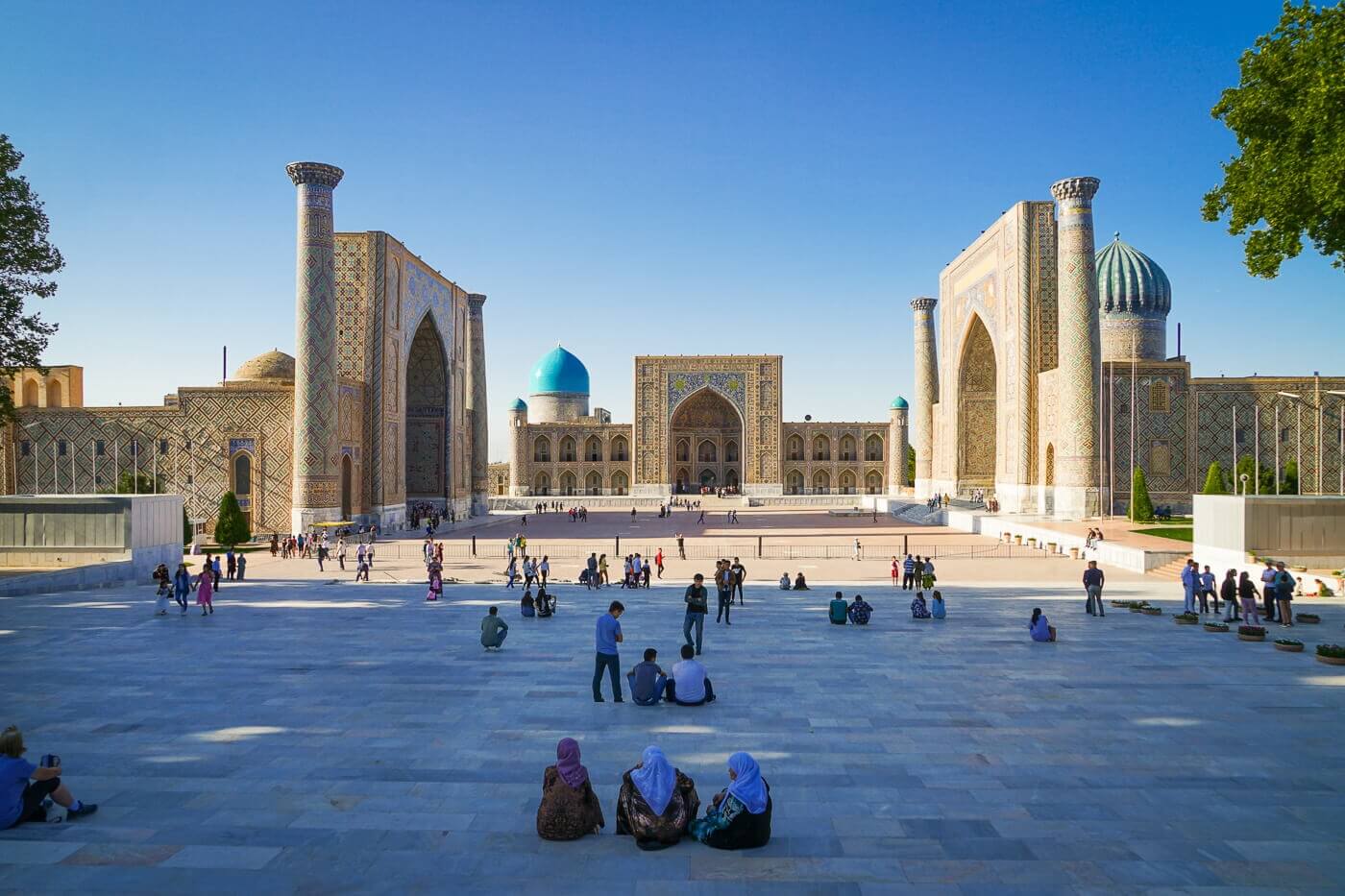
We will then visit Registan Square, the most famous landmark in all of Uzbekistan. This square was the focal point of medieval Samarkand and is framed by three beautiful madrassas (religious schools), Ulugbek, Sherdor, and Tillya Kori. Our next stop is Gur-e-Amir, the gilded mausoleum where Timur is buried. We will hear stories from his life and how he began the construction of Samarkand.

Hotel Zarafshan Parkside 4* or similar.

Samarkand, Uzbekistan

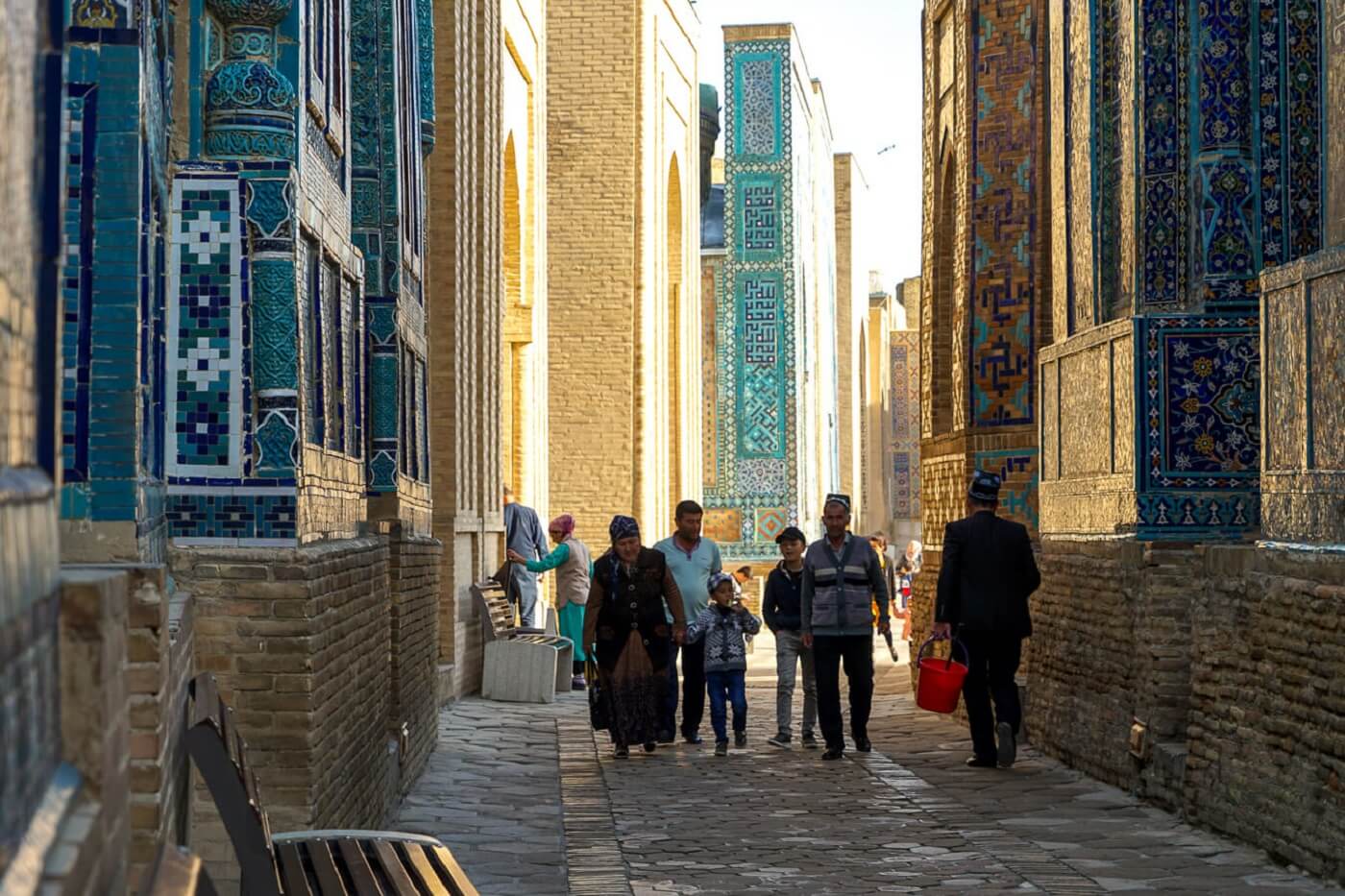
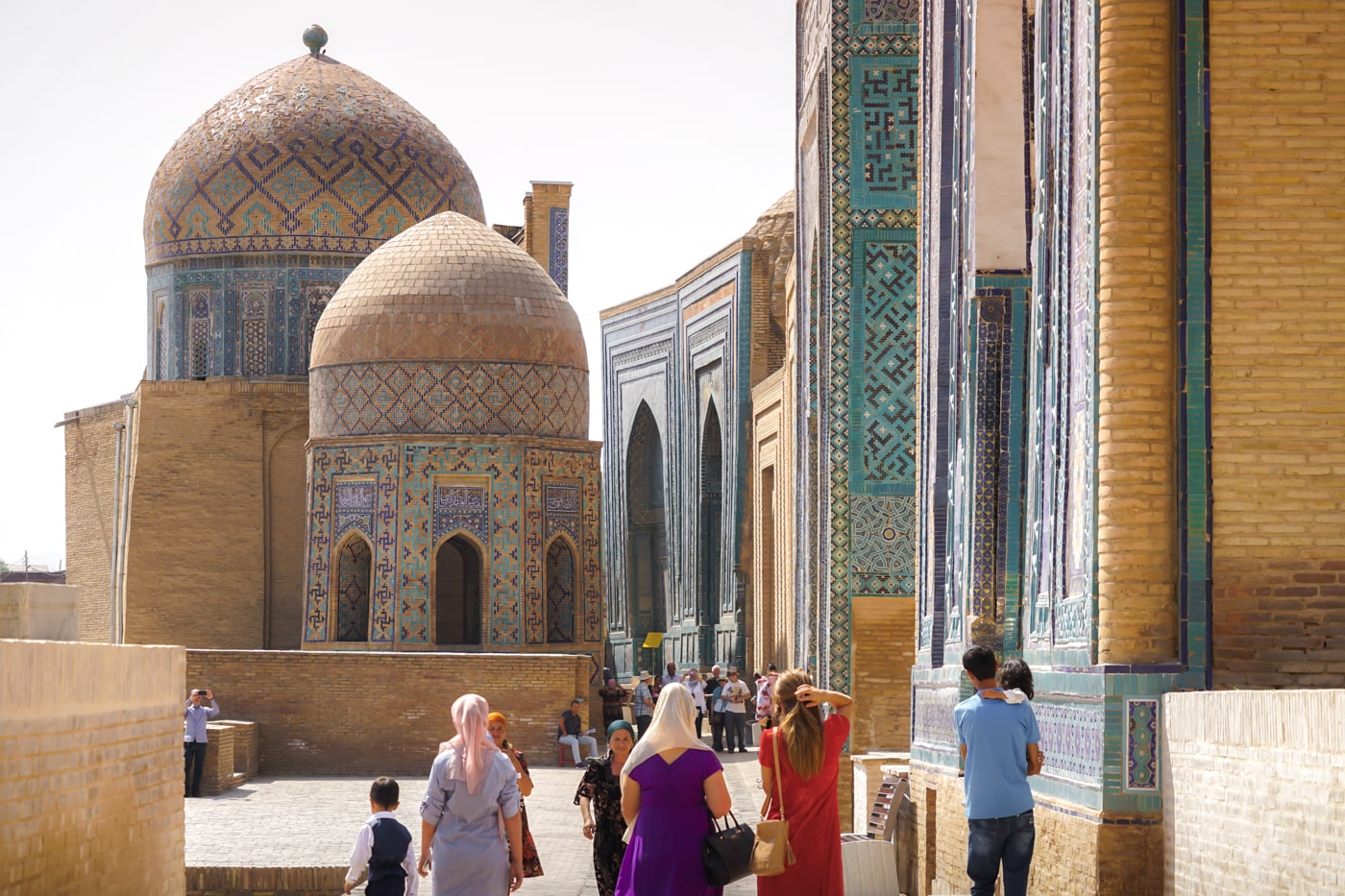
After breakfast, we will continue to explore the fairytale city of Samarkand. We go first to the Shah-i Zinda, a magnificent tiled necropolis, and then visit Ulgubek’s Observatory, which was once the biggest research center in Central Asia. Ulugbek was decades ahead of the West with his observations of the solar system and the Earth, and we will learn more about his story in this prestigious setting. At Afrasiyab Museum, you will get a chance to learn about the ancient city of Samarkand – then known as Afrasiyab – which was destroyed by the Mongols in the early 13th century. In the afternoon, we visit the paper mill at Koni Gil village to learn more about the traditional way of making Samarkand paper from mulberry. Free time before our Uzbek farewell dinner.

Hotel Zarafshan Parkside 4* or similar.

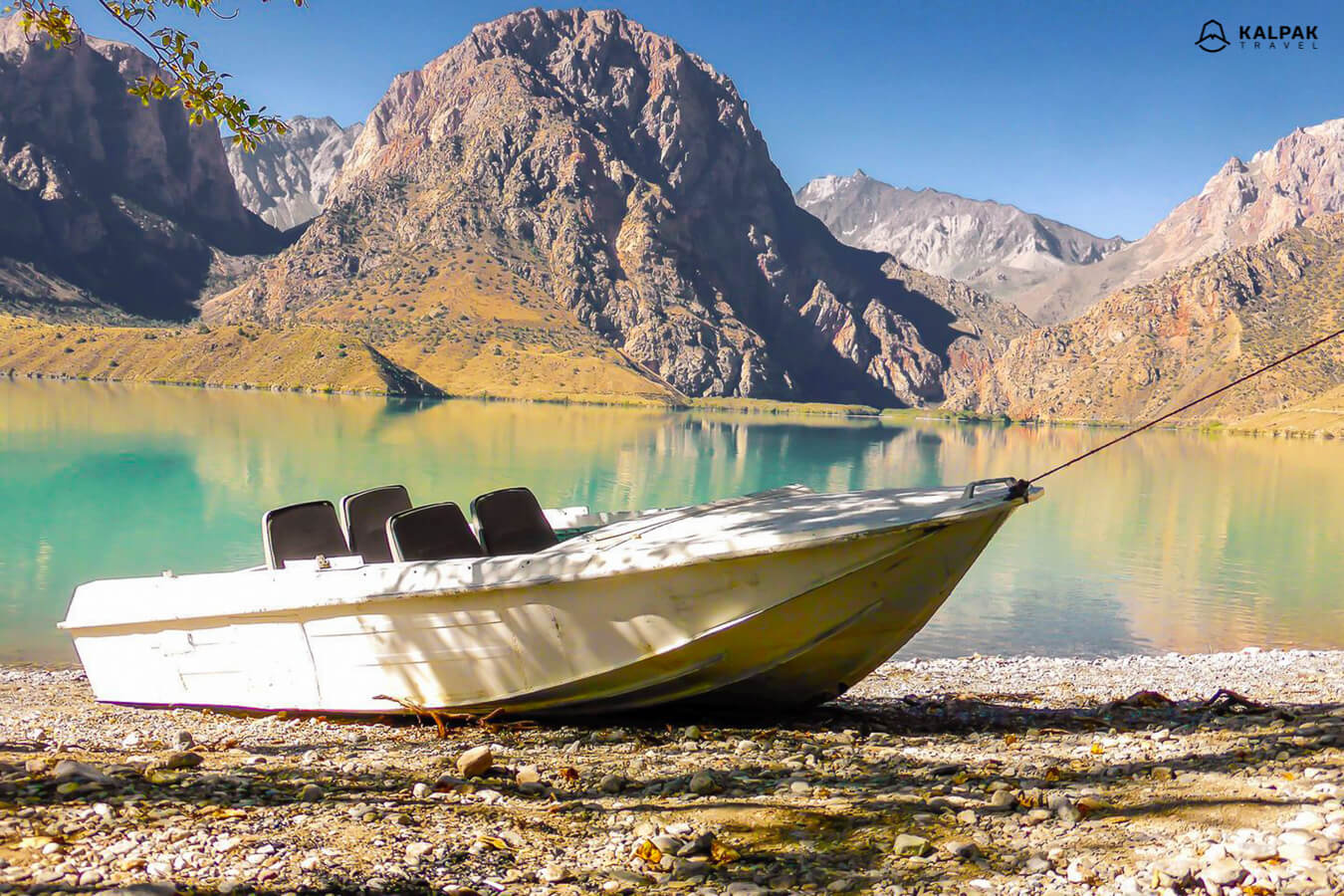
Isakanderkul Tajikistan

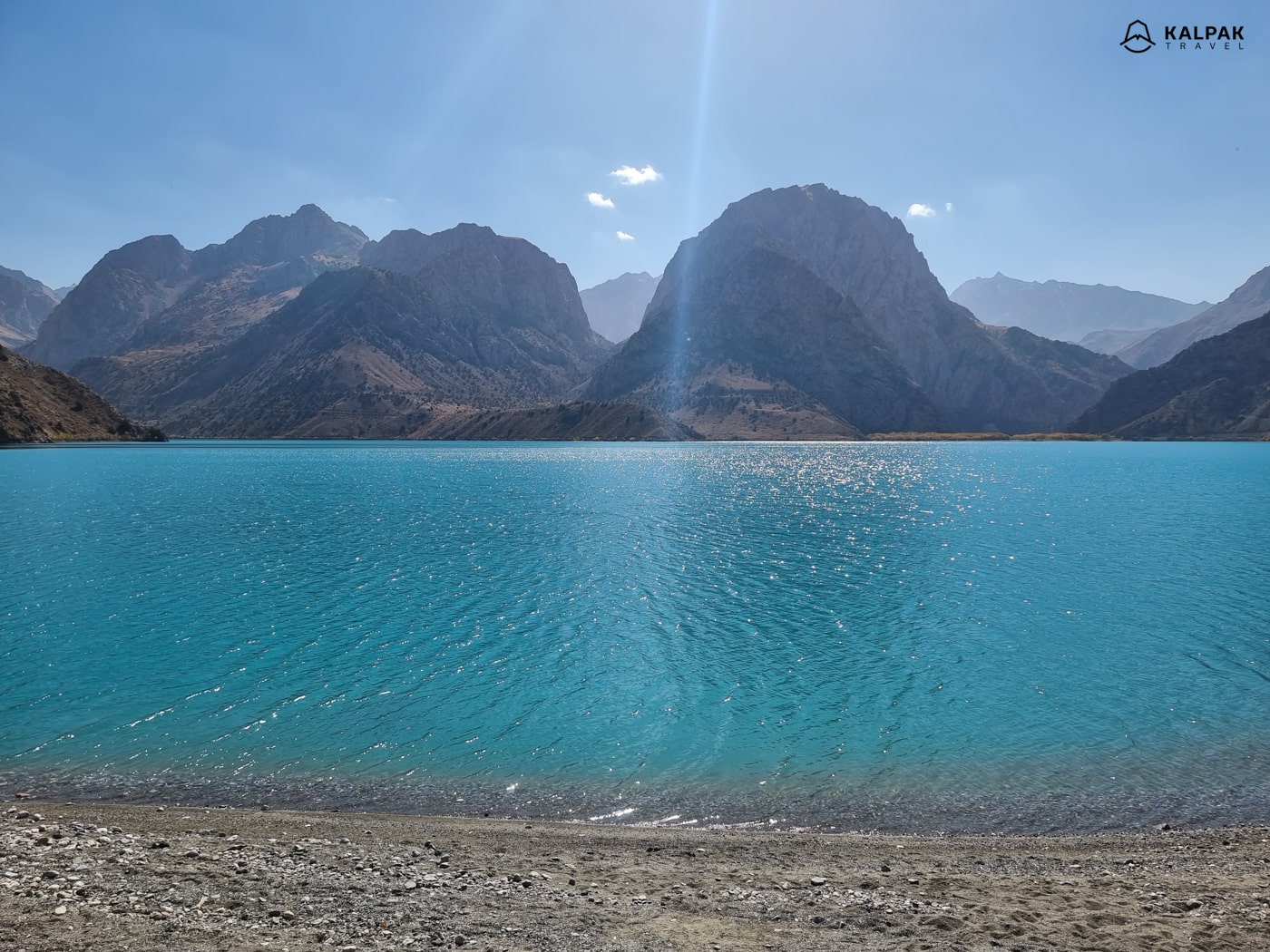
After breakfast, it is time to say goodbye to the marvelous cities of Uzbekistan and transfer to the border crossing with Tajikistan. We will pass through both border checkpoints on foot, complete all necessary formalities, and meet our Tajik guide and driver on the other side. A few minutes after the border, just off the main road, we will stop at the UNESCO World Heritage Site of Sarazm, the ruins of which date from the 4th to 2nd millennia BC. We will then continue on a long but very scenic driving day through the Zarafshan Mountains to Dushanbe, the capital of Tajikistan. On the way, we will visit Iskander Kul, an idyllic mountain lake 30 km off the main road. The lake, named after Alexander the Great (“Iskander” is the Persian form of Alexander), is triangular in shape and considered one of the most exquisitely beautiful lakes in all the former Soviet Union. It’s nestled in the Fann Mountains at an altitude of 2,200m.  We will have lunch on the shore of the lake. Those who like can then take a short hike to a nearby waterfall. Be prepared for colder weather in the mountains. In the afternoon, we will depart from Iskander Kul and finish driving to Dushanbe. After an ascent to the Anzob Tunnel, our route is along the Varzob River down to the Varzob Gorge, a popular weekend getaway for locals from Dushanbe. We will reach Dushanbe in the evening, check in at the hotel, and have dinner.

Hotel Hyatt Regency 5* or similar.

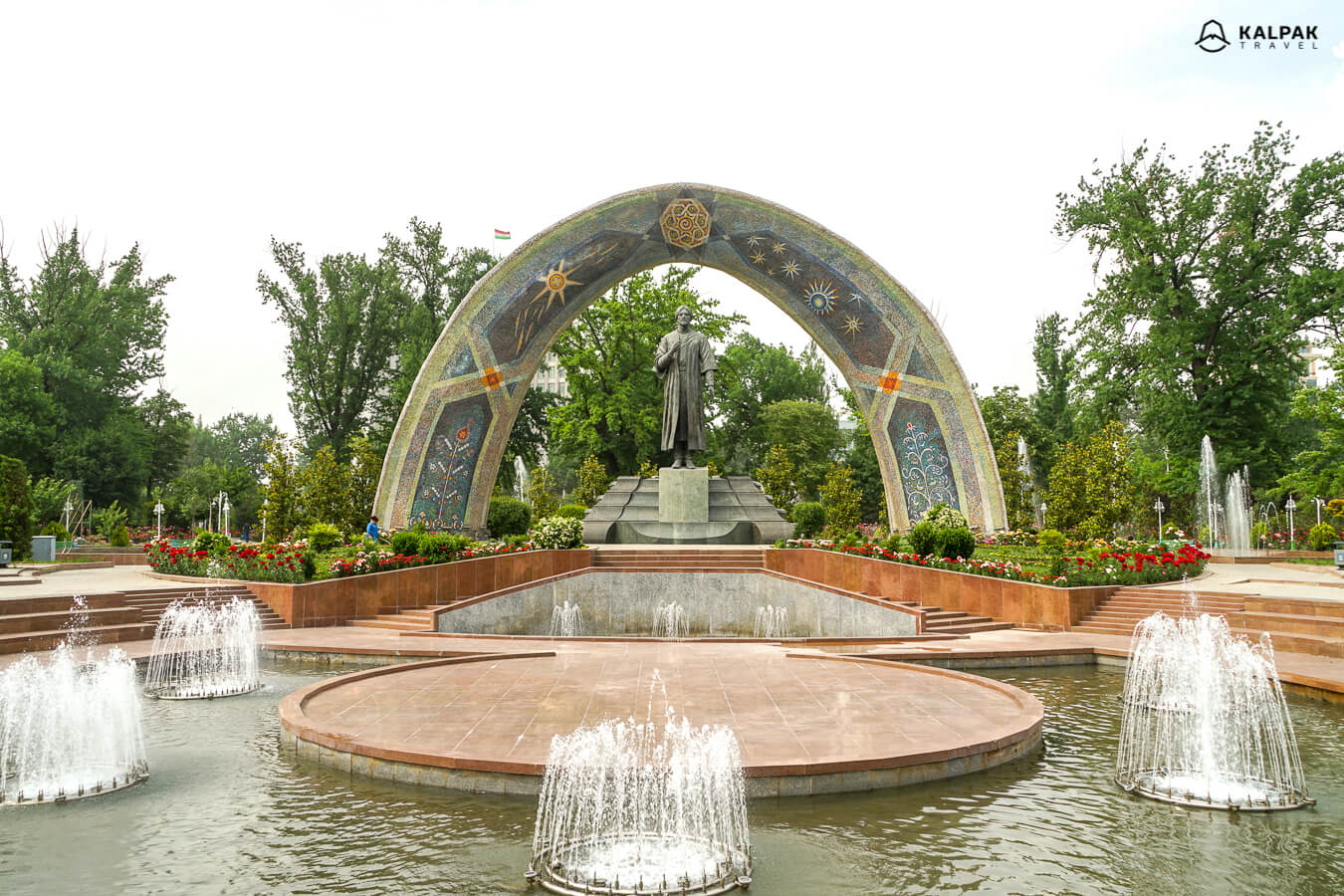
Dushanbe sightseeing Rudaki park

As well as being the capital, Dushanbe is the largest city in Tajikistan. It was a small village with a market every Monday. The Persian word for Monday is Dushanbe, and that’s how the settlement got its name. It was not until the Soviet period that Dushanbe grew into the political and industrial center of Tajikistan.
After breakfast, we start the day with a visit to the National Museum of Antiquities with its famous Sleeping Buddha, excavated from the Buddhist monastery at Ajina Teppa. Next, we visit Navruz Palace. Initially, this building was envisaged as the largest teahouse in the world. However, during construction (which involved hundreds of artisans from all over Tajikistan), the interior became so impressive that it was decided to use it as a palace instead of a teahouse. Most of the rooms are now used for official government meetings with guests from abroad, or for international conferences. Just one room is open to the public, and usually, weddings take place there. This is a unique opportunity to tour the interior of this ornate modern palace. Today we will also have a chance to visit a famous stone mosaics master, whose works are also on display in the Navruz Palace. Touring today also includes the Museum of Musical Instruments and Folklore. Badakhshani actor Gurminj Zavkybekov began this small but fascinating museum. Displaying a fine collection of beautifully crafted antique and modern instruments from Afghanistan, the Pamirs, Turkey, and China, the museum is often the scene of exuberant performances and demonstrations.
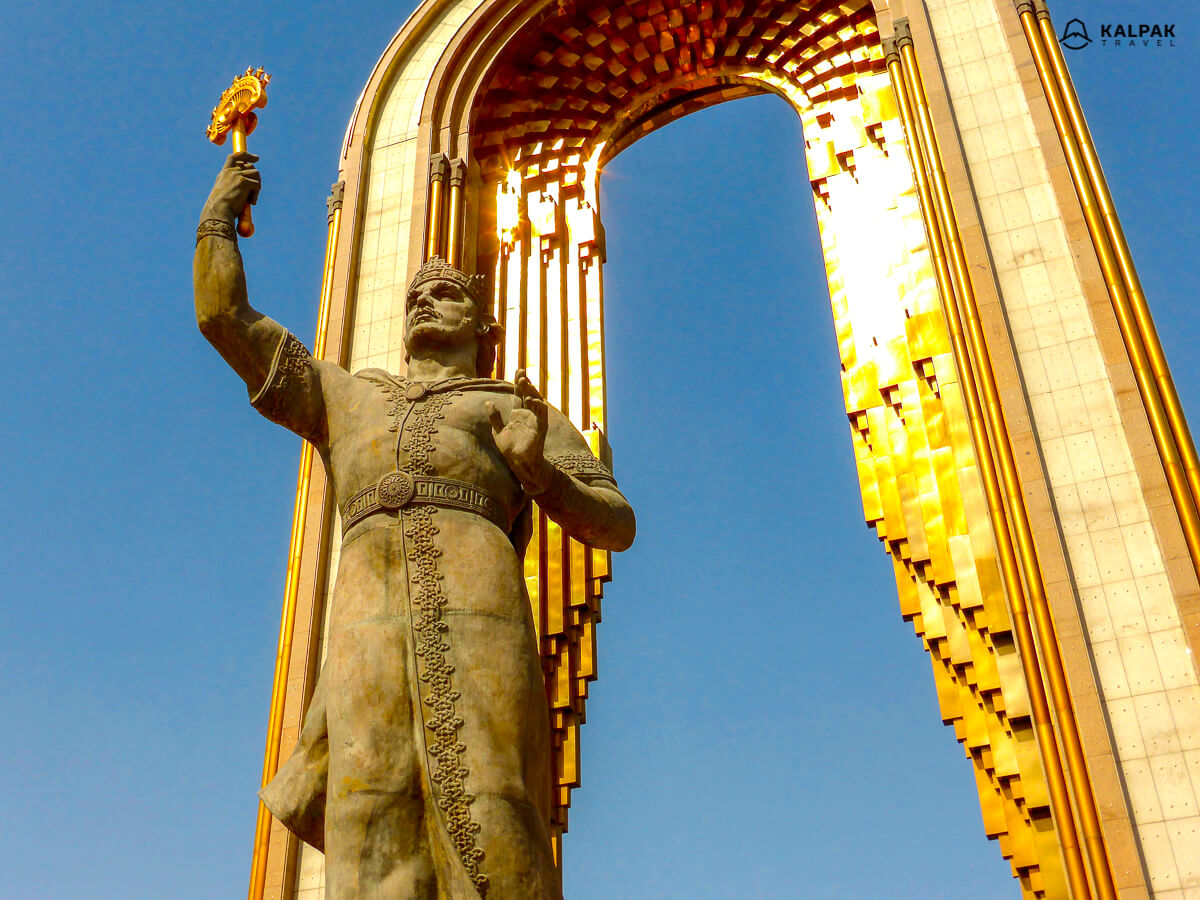
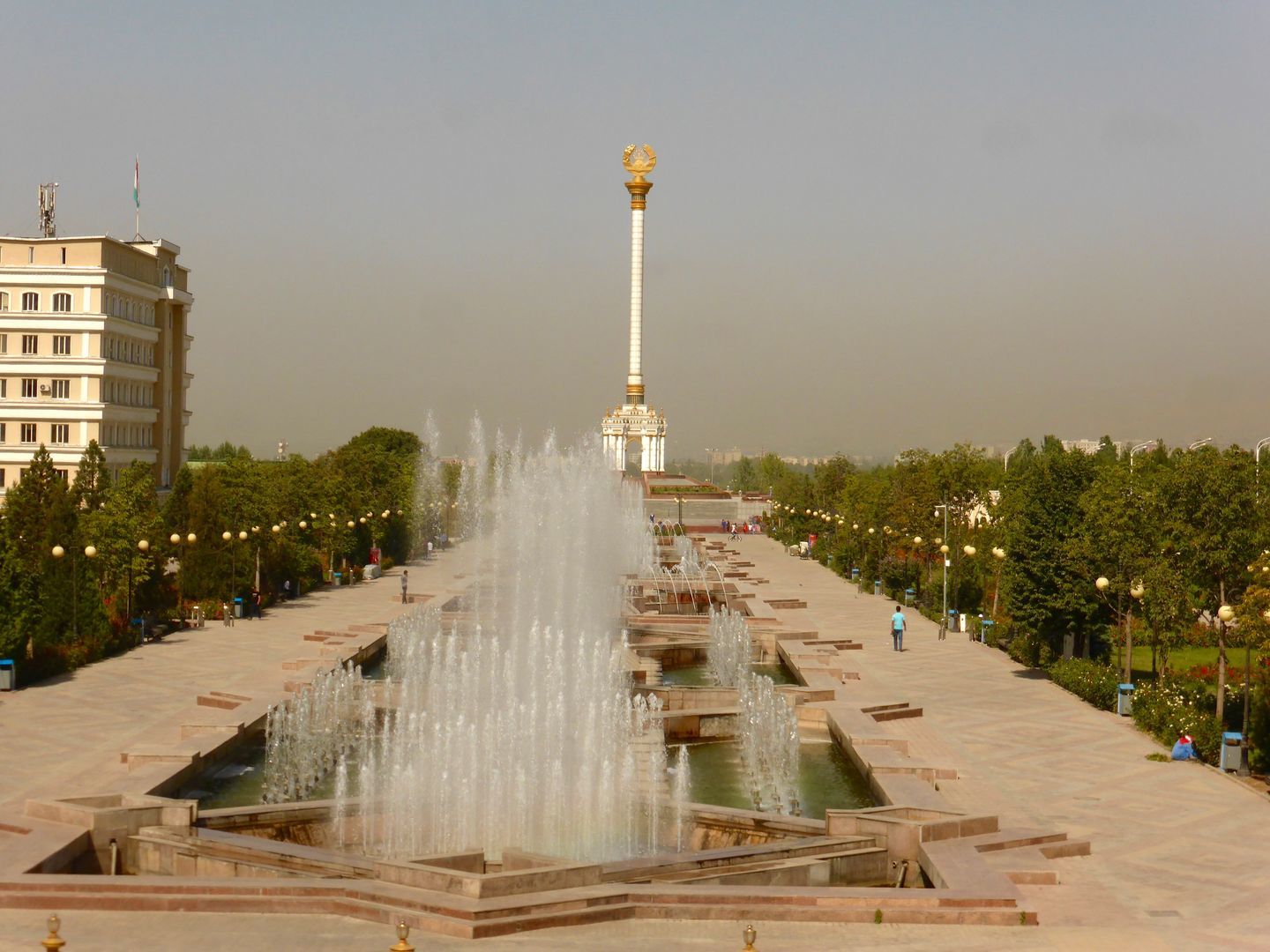
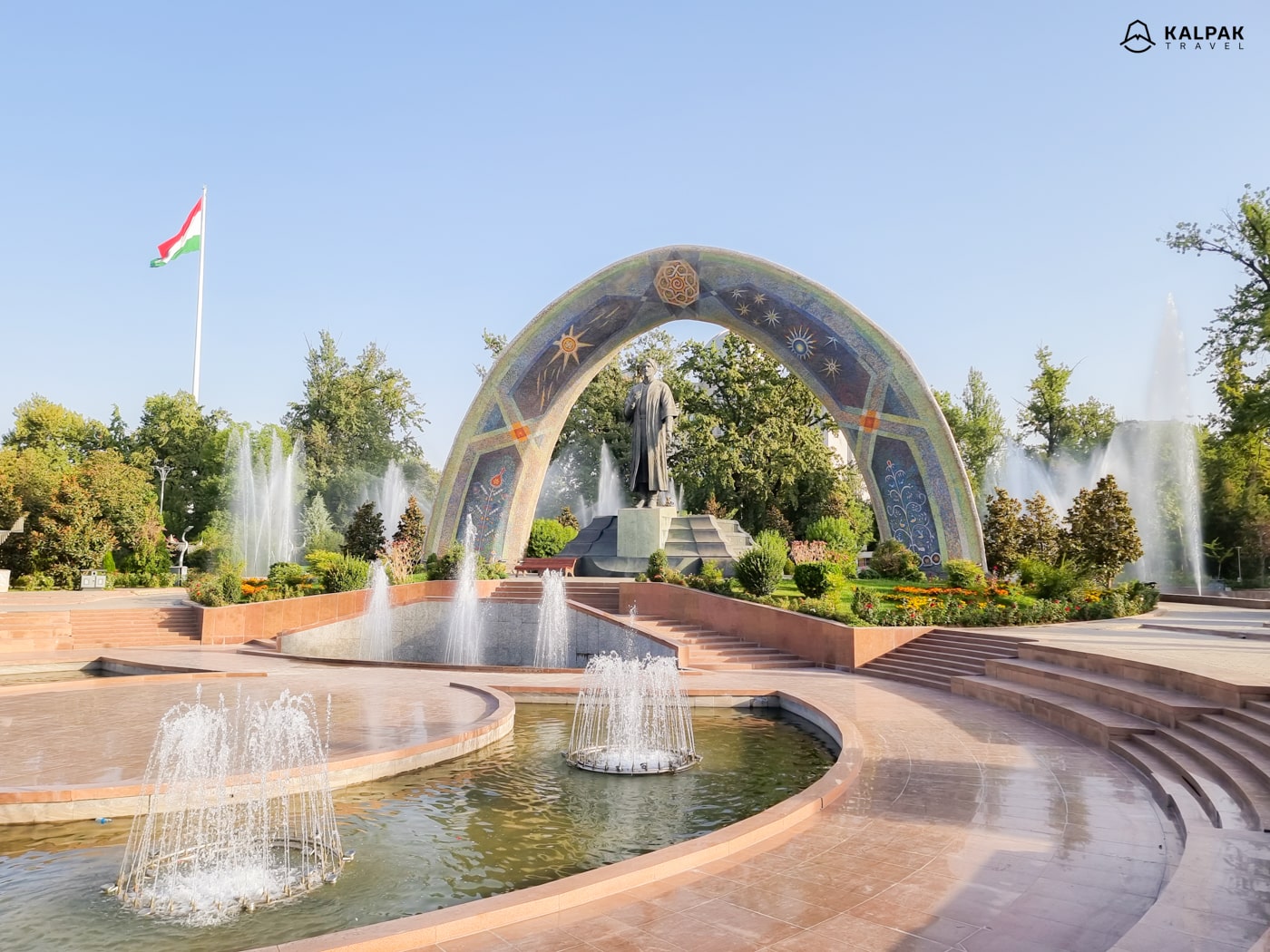
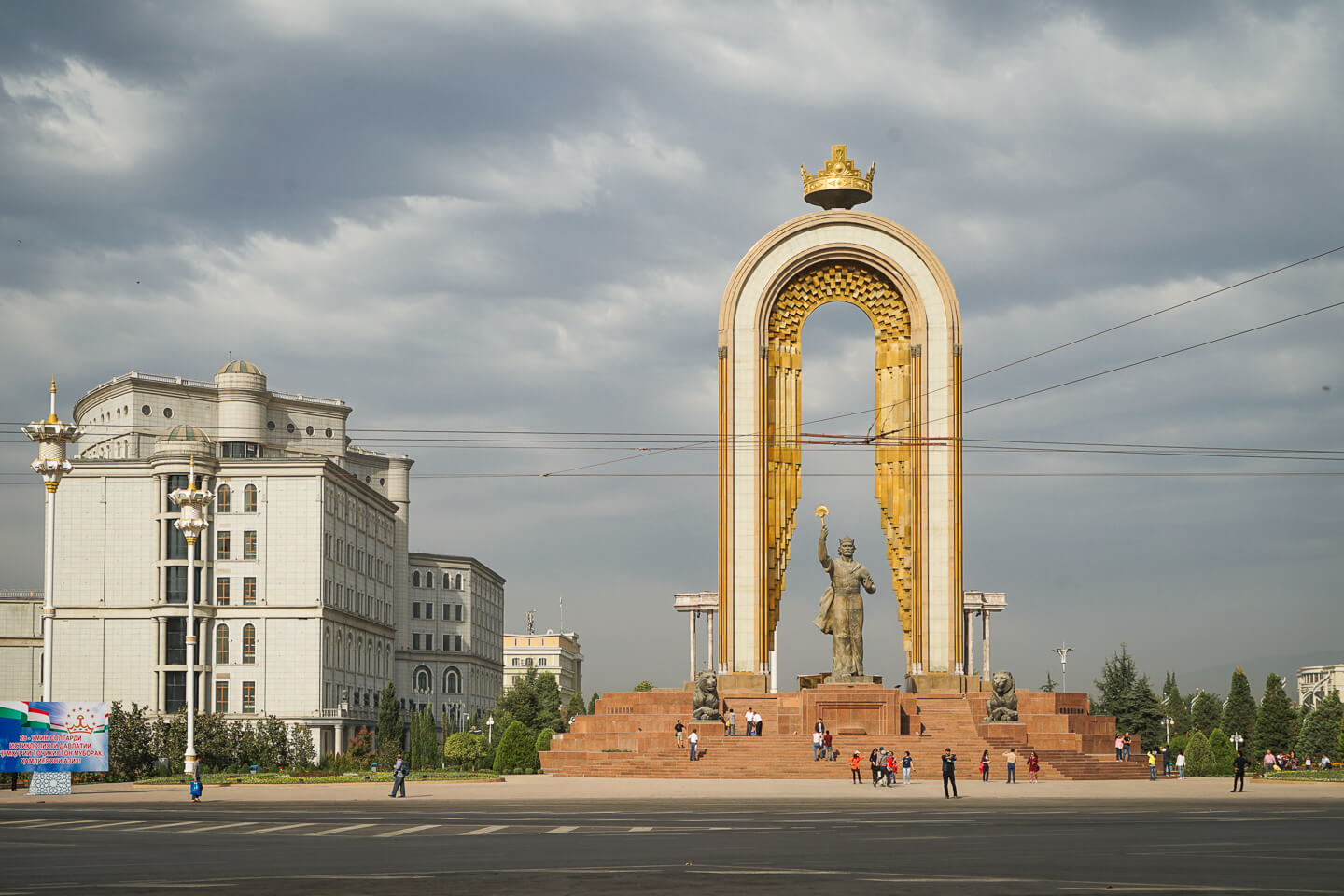
After, we will visit the statue of Ismail Somoni, whose mausoleum you saw in Bukhara. This large monument commemorates the 1,100th anniversary of the Samanid State, a Golden Age of the Tajik nation, when science and arts flourished. From there, we will walk up to Rudaki Park, dedicated to the great Persian poet Rudaki, who also lived during the Samanid period, in the 10th century AD. The main walking avenue of Dushanbe, where our hotel is located, is also named after Rudaki.

Hotel Hyatt Regency 5* or similar.

Somoni golden statue in Dushanbe

After breakfast, check out of the hotel. We will first visit the newly built Independence Monument. From the top, we can enjoy a nice last view of Dushanbe, before taking the flight to Almaty, Kazakhstan. The Air Astana flight is scheduled to depart at 1:30 pm and will arrive in Almaty at 3:15 pm. We will meet our Kazakh local guide and driver and transfer to the city center. Check in at the hotel and have a Kazakh welcome dinner in a nice local restaurant.

Hotel Novotel 4* or similar.

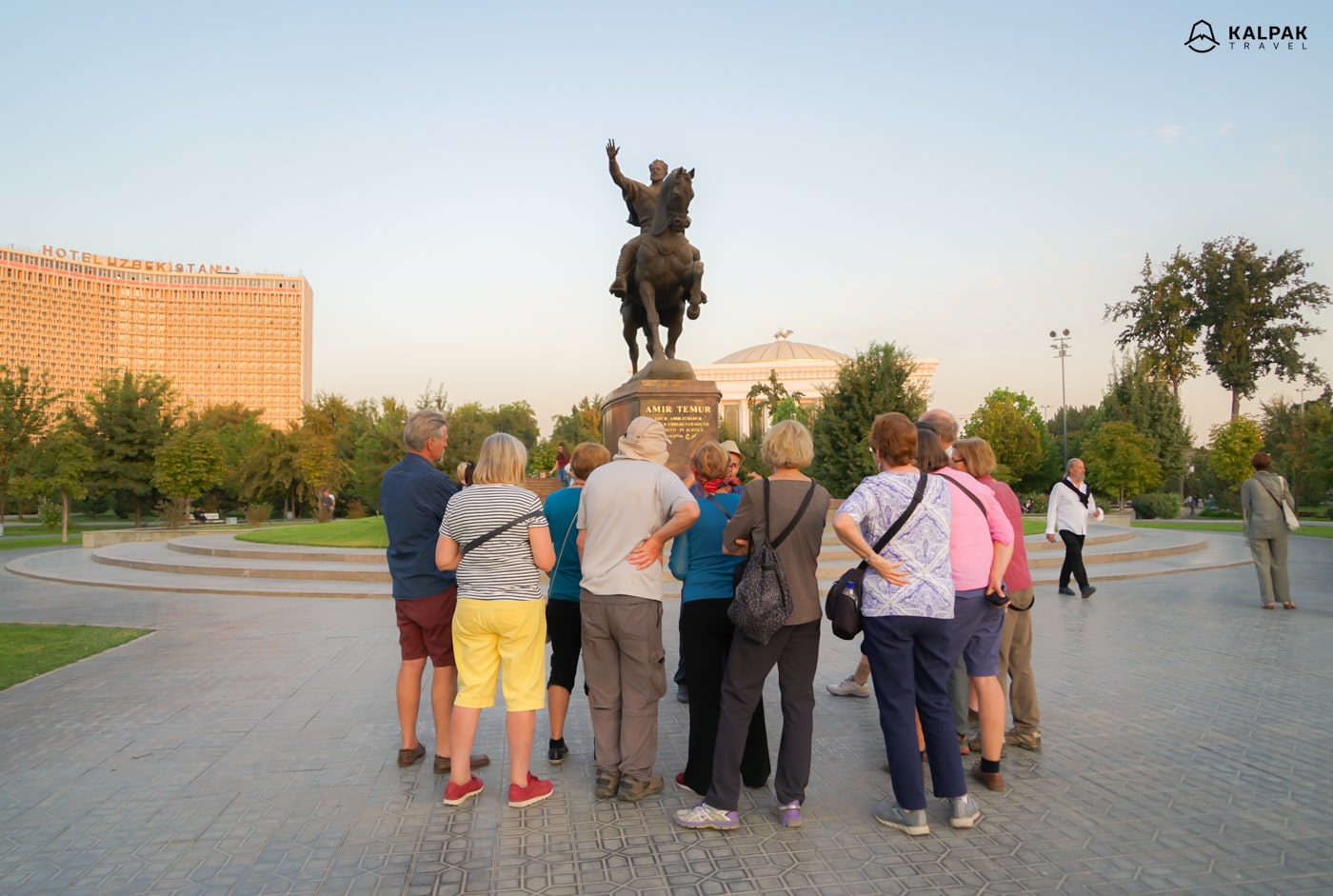
After breakfast, we depart from the city and drive for around 1.5 hours to Issyk mountain Lake. At an altitude of around 1,800 meters, the lake was formed about 10,000 years ago after a landslide formed a 300m high natural dam. The lake used to be a lot larger but in the summer of 1963, a gigantic mudflow destroyed the lake, and it ceased to exist. Lake Issyk is a result of the Soviet-era restoration work that was carried out for several decades. Nowadays, Issyk Lake is again one of the most loved recreation areas of Almatians due to the nature and the turquoise waters. We will have a short walk to the shore of the lake, enjoy the views, and learn more about the lake’s tragic history. After a brief visit to the lake, we drive for half an hour to the nearby village of Esik, the land of the Golden Man. The area just outside of the town is where in 1969, a group of soviet archaeologists made an astonishing discovery – an untouched grave of an ancient Saka warrior, who was dressed in a suit of armor consisting of thousands of gold pieces. We will visit the small museum located just outside the excavation area. The so-called “Golden Man” has become the national symbol of Kazakhstan, depicted on its banknotes, and we also saw a monument of the Golden Man on the Central Square of Almaty on the previous day. Afterwards, we will meet a family of farmers who produce their own cheese and wine. After lunch, return to Almaty.
Independent dinner.

Hotel Novotel 4* or similar.

Almaty is the largest city in Central Asia’s richest country, Kazakhstan. Until 1997, it was the capital, and it remains the country’s business and educational center. Roads here are wide and tree-lined, and there are good views of the Zailisky Ala-Too Mountains, which form the backdrop to the city. The name Almaty means “the place with apples,” and it is believed that this is where apples originated.

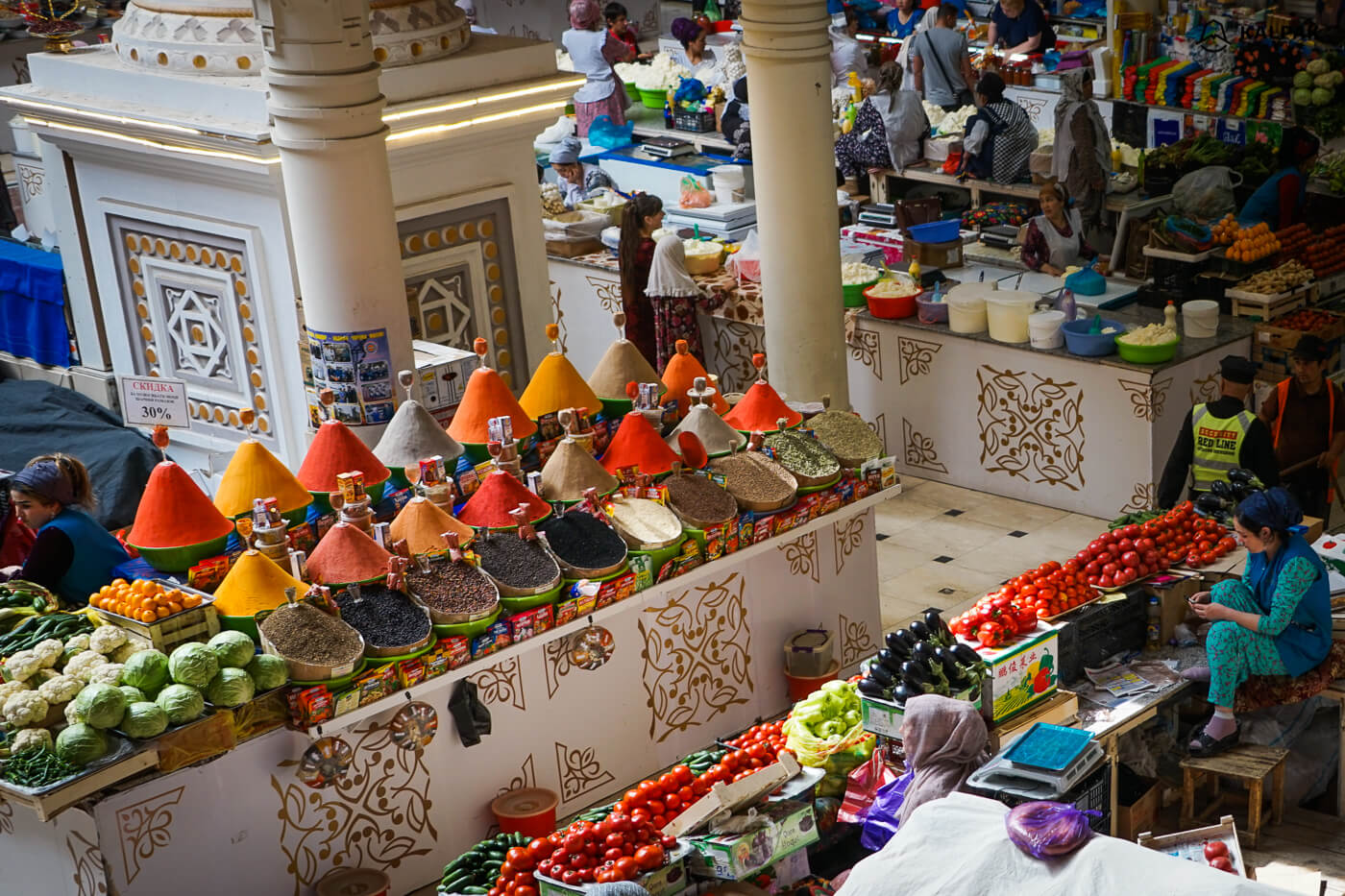
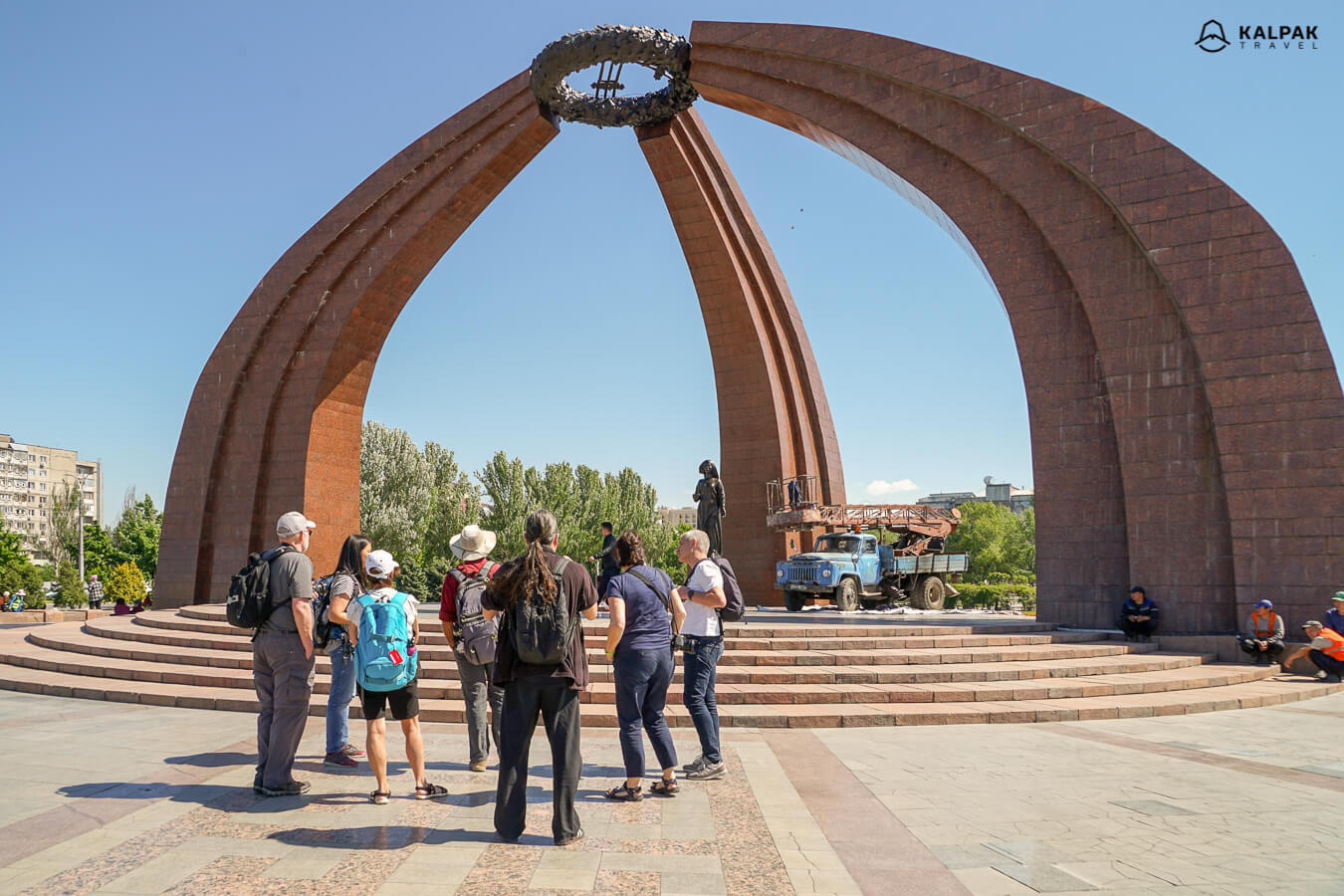
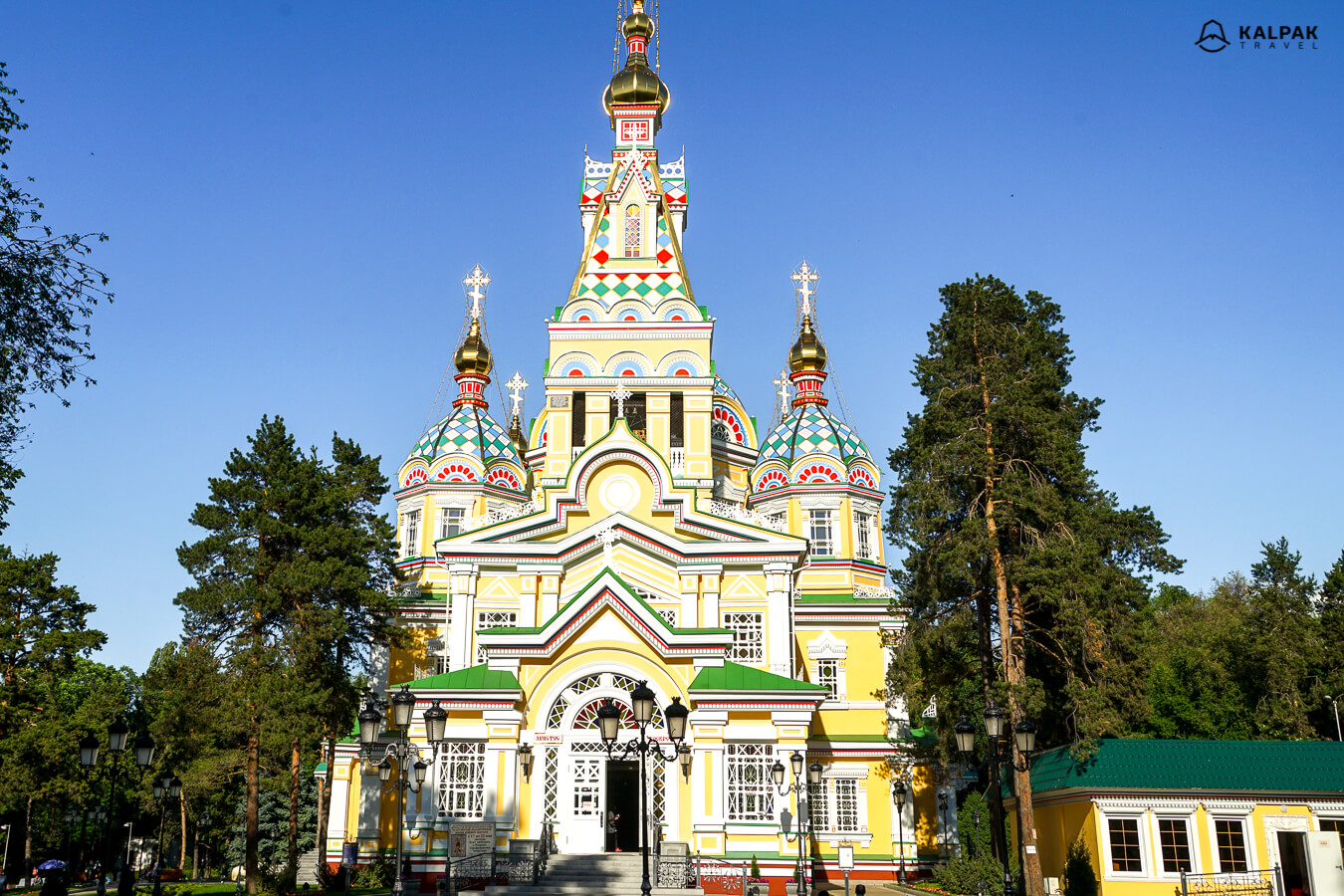
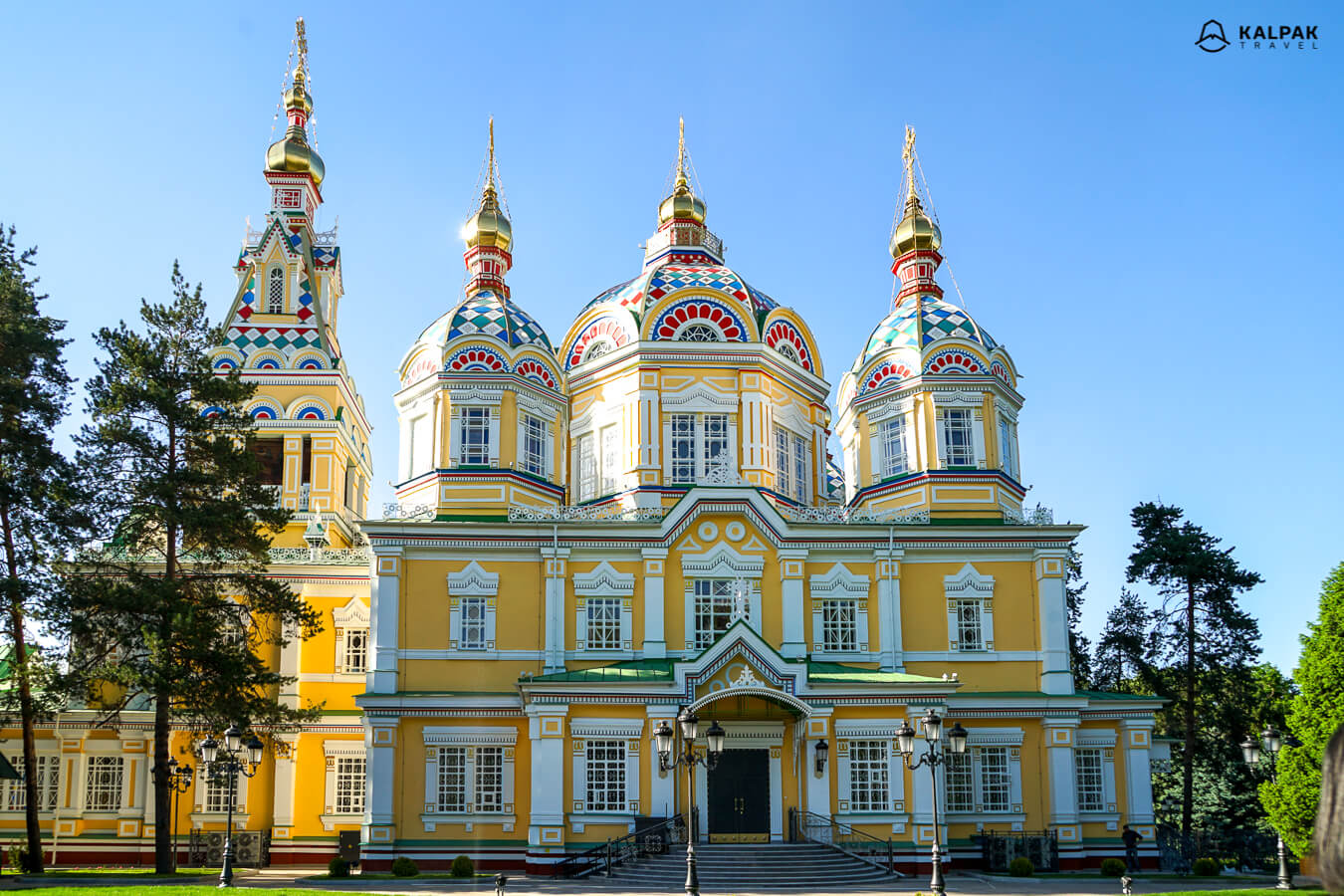
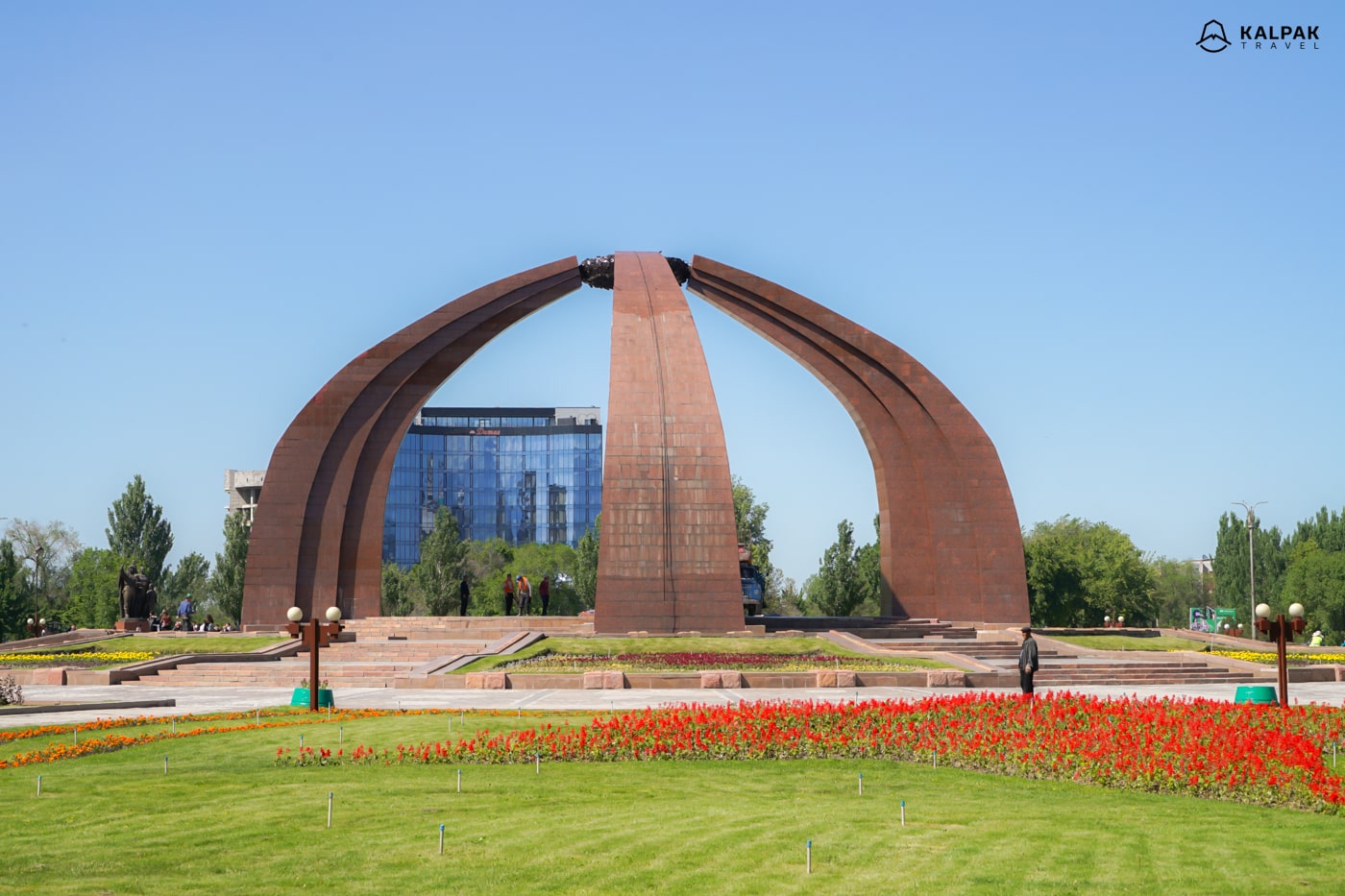
We start the city tour at the Central Square, and then head to Panfilov Park to see the most famous sight of Almaty, Zenkov Cathedral. In the same Park is the impressive Soviet Glory Memorial, a tribute to 28 men who, as the narrative goes, repulsed 50 German tanks from the outskirts of Moscow during World War Two. We will also visit Green Bazaar, the city’s bustling central market. In the afternoon, transfer to the airport to catch the Air Astana flight to Bishkek (5:15 pm – 7:05 pm). The duration of the flight is less than an hour, but because Kyrgyzstan is one hour ahead of the other Central Asian countries, you are scheduled to arrive only at 7:05 pm. Kyrgyz welcome dinner on the way to your hotel.

Hotel Orion 5* or similar.

Bishkek Lenin statue in front of the national museum

Bishkek, the charming capital of Kyrgyzstan, is relatively young. It started as a Russian garrison named “Pishpek” in the late 19th century, and it was only during the Soviet period that it grew into a city. It is a very green place, with tree-lined boulevards and many parks.

During the city tour, we will learn the history of both Bishkek and Kyrgyzstan, as part of the Great Silk Road, and the more recent Soviet Union, and get a glimpse of how it is shaping today. We will explore main sights such as the Ala-Too square with the National History Museum, the White House, and the old square, but also discover interesting places off the beaten path.

Hotel Orion 5* or similar.

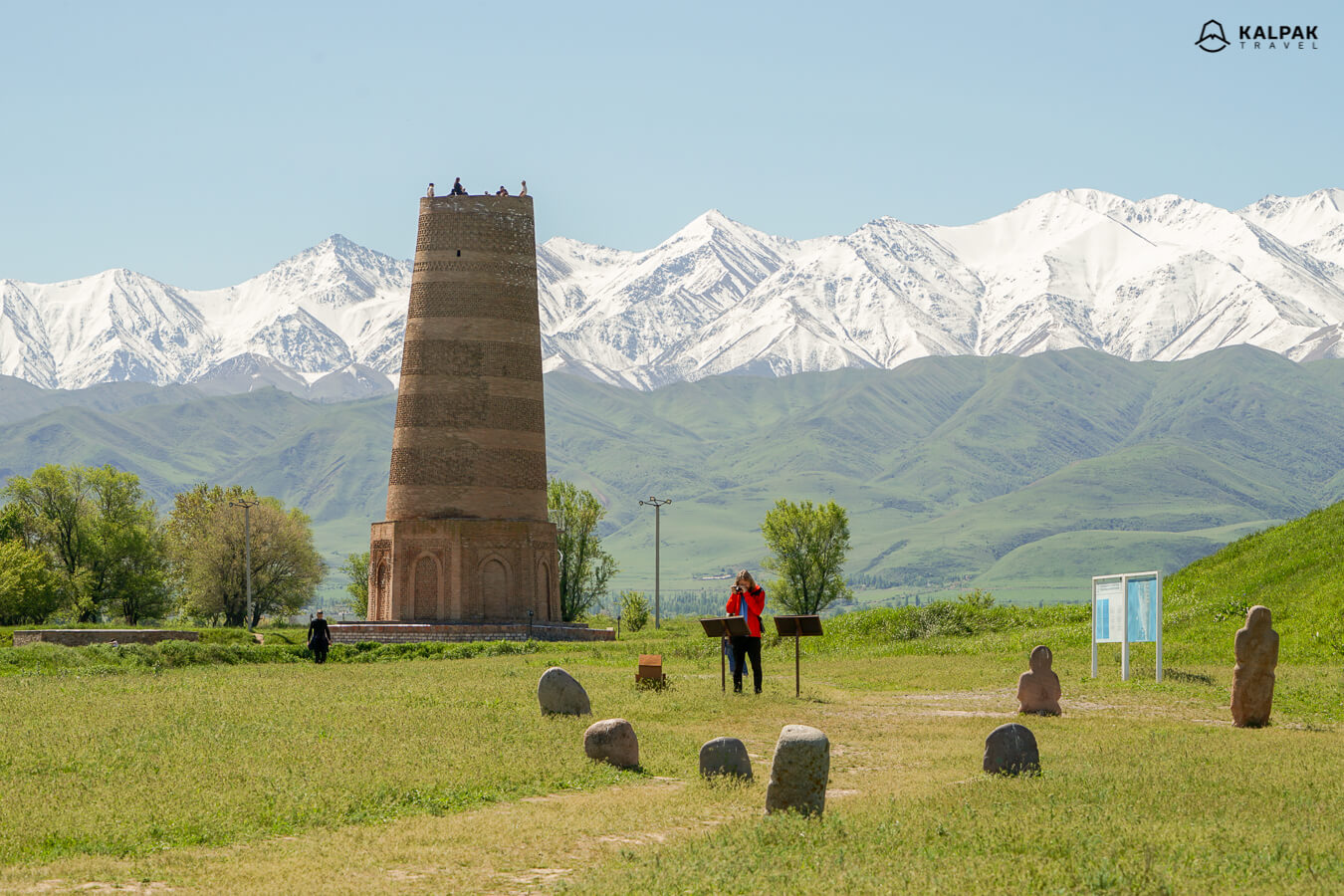
Burana Turm in Kirgistan

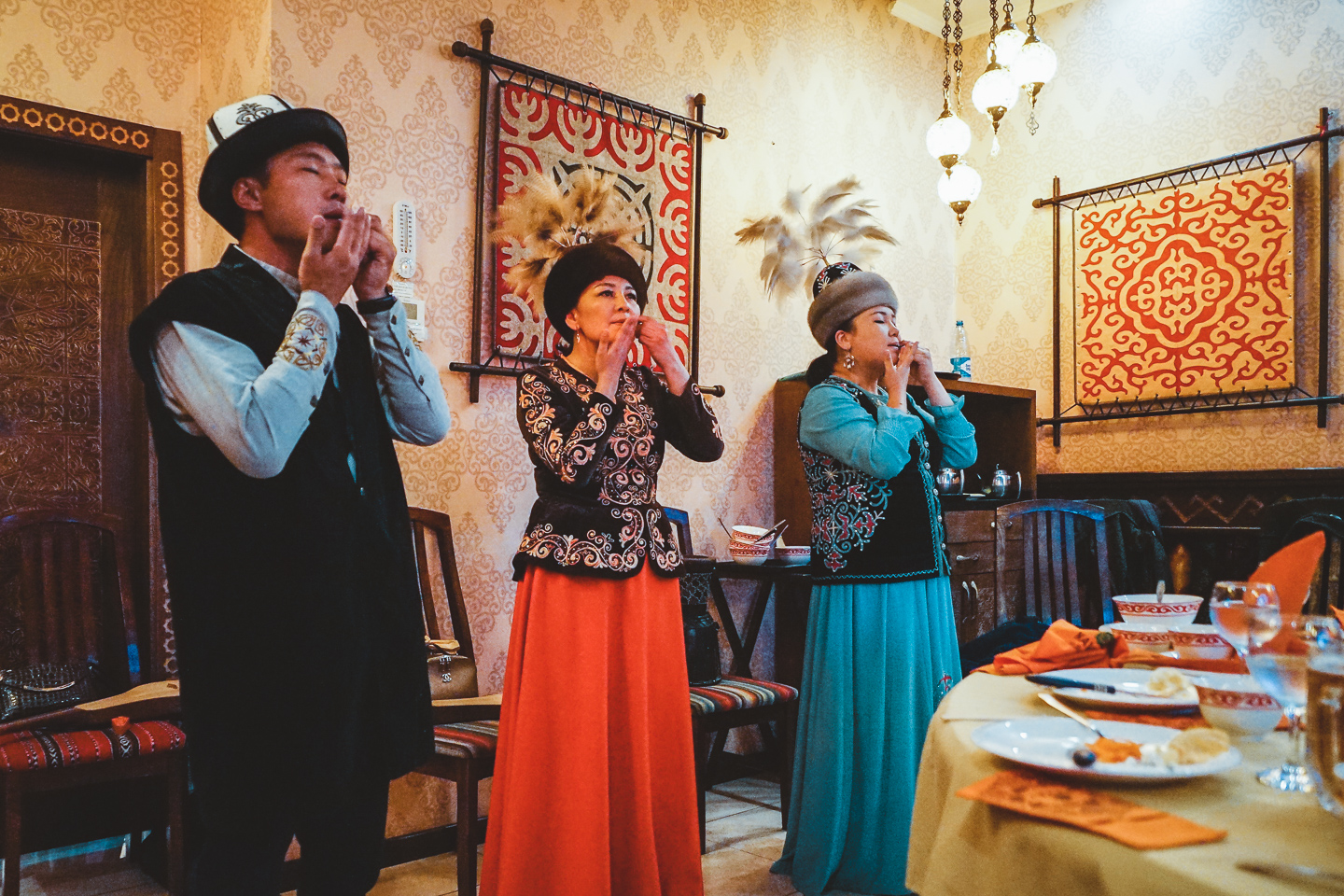
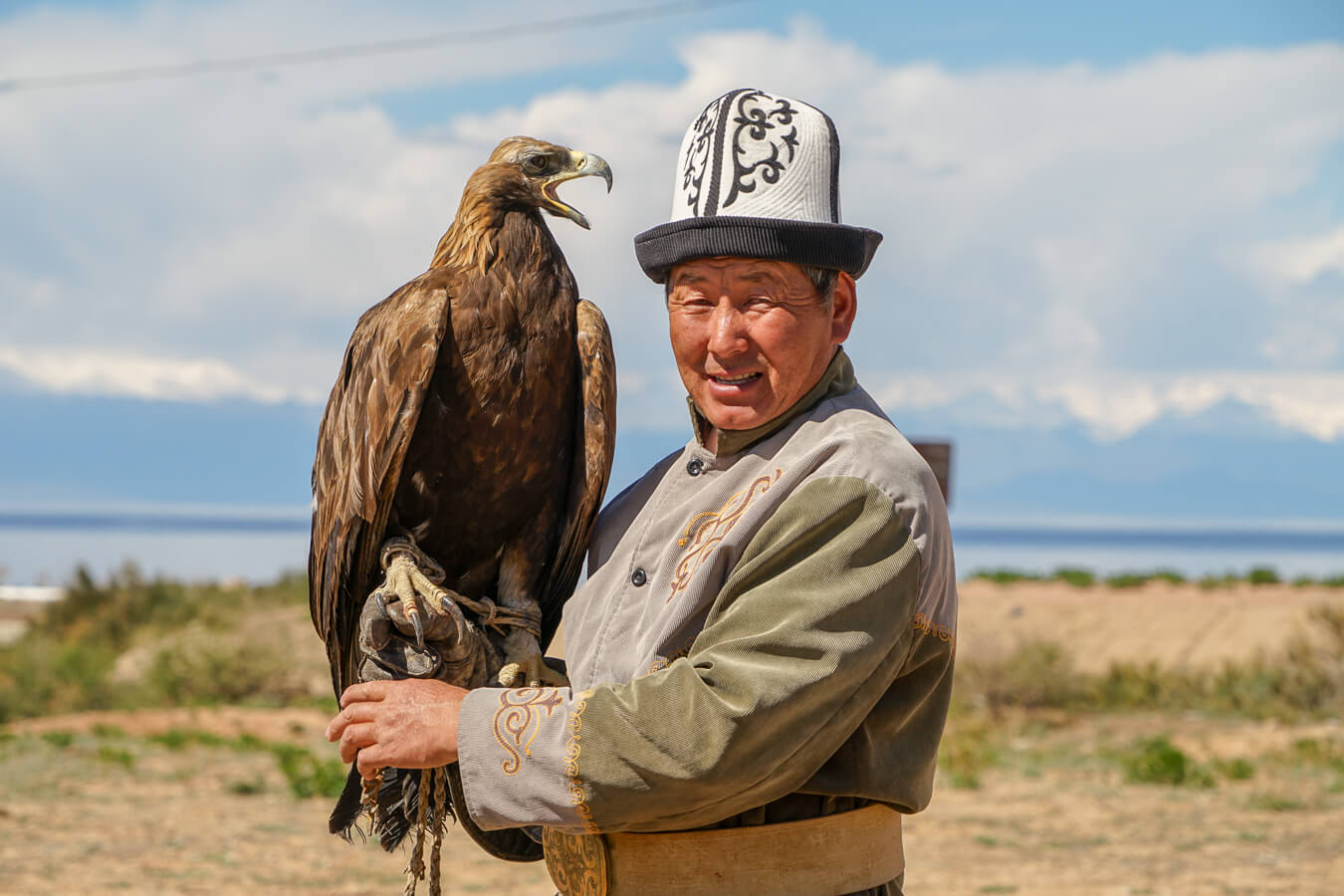
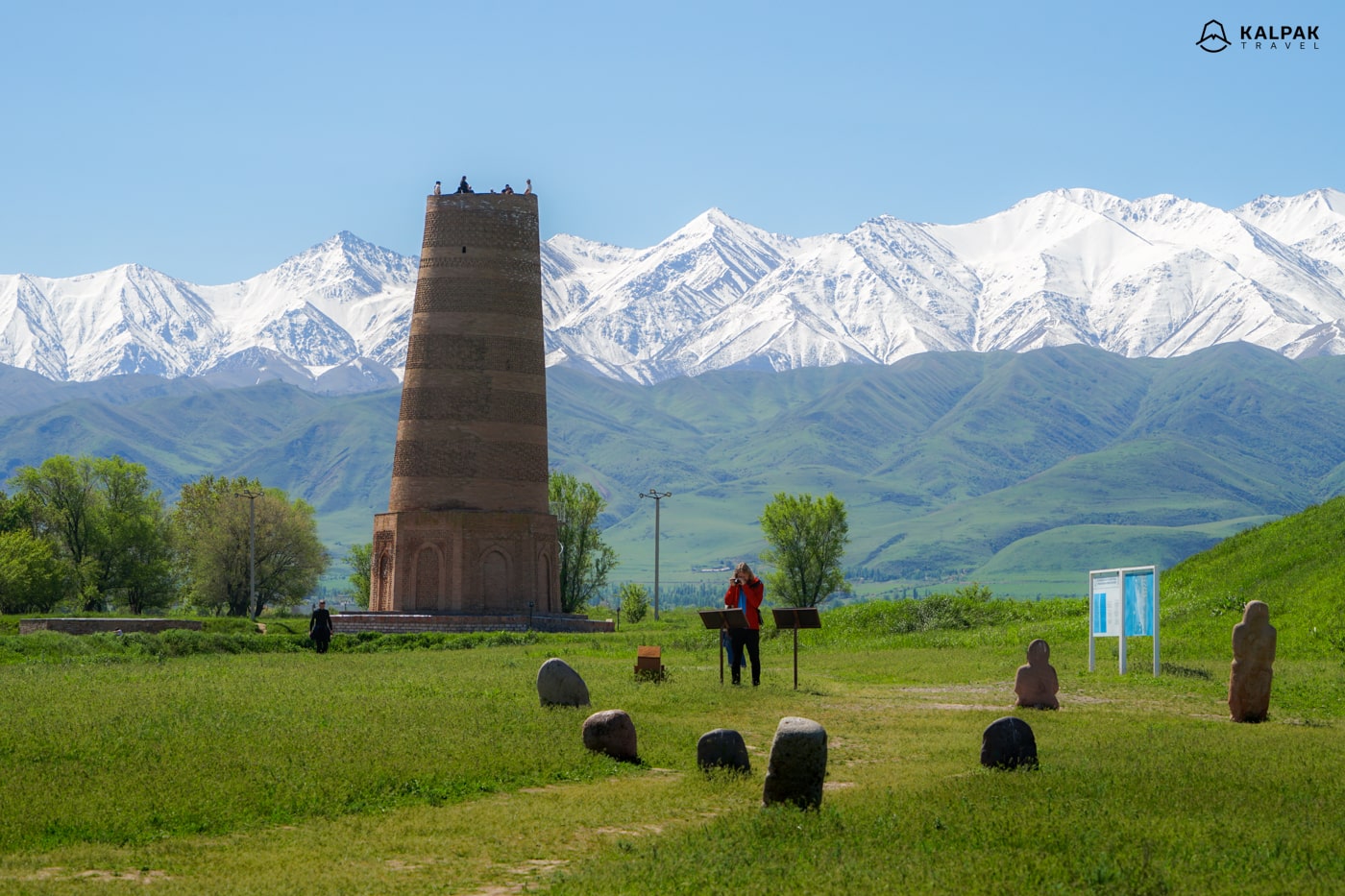
We will begin the day with a two-hour drive to Burana Tower, 85km east of Bishkek. The minaret at Burana was built in the 11th century in the medieval city of Balasagun, the capital of the mighty Karakhanid Empire. You can climb up the winding staircase to enjoy extensive views of the Chuy Valley. There is also an open-air museum featuring a collection of ancient balbals, carved stone figures used as monuments. We will have lunch in a local family’s house in the nearby village and watch a performance of national horse games called Kok Boru or Ulak Tartysh. In the afternoon, we will have a chance to meet an eagle hunter, who will make a short performance for us. Later, return to Bishkek. Before dinner, you will have some time to pack or do some shopping.
Farewell dinner.

Hotel Orion 5* or similar
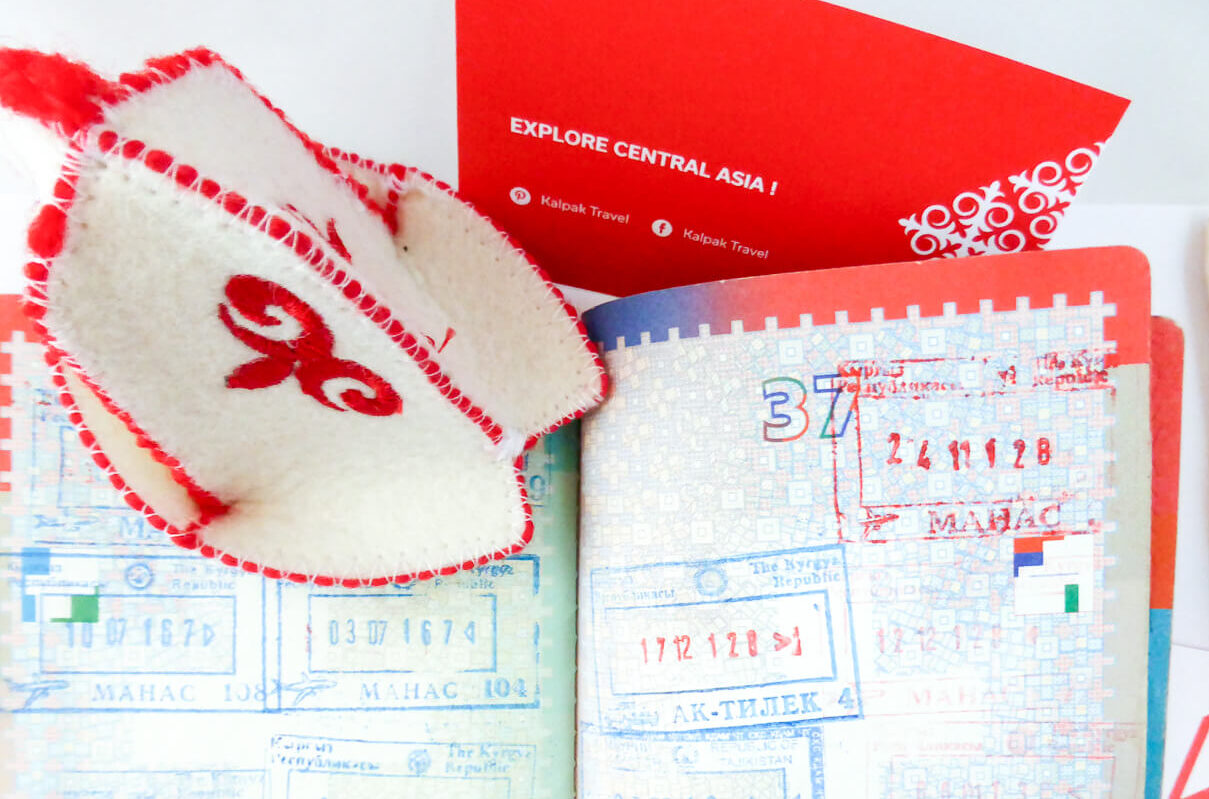
departure passport with stamps

Sadly, the time has come to transfer to the airport for your flight back home. We hope you will have enjoyed your trip to Central Asia and that you have wonderful photos and memories to share with family and friends back home.

Inclusions

Transport
Train, Airplane, Minivan
Meals
18 breakfasts, 17 lunches, 16 dinners
Accommodation
Hotel (18 nights)
Included Activities

City tours and cultural activities as mentioned in the itinerary.

dates & price

You can choose to join a small group on a guaranteed departure or book a private tour on the date of your choice
*
*
*
Total trip price
from

$6720

USD

18

Days

Single supplement available for $1600

Deposit: $500

Departing
Finishing
Status
Price
Booking
31 Mar 2026
17 Apr 2026
Few Places Left
$6720
7 Apr 2026
24 Apr 2026
+ Available
$6720
15 Sep 2026
2 Oct 2026
+ Available
$6990
13 Oct 2026
30 Oct 2026
+ Available
$6990
30 Mar 2027
16 Apr 2027
+ Available
$7530
6 Apr 2027
23 Apr 2027
+ Available
$7530
4 May 2027
21 May 2027
+ Available
$7530
14 Sep 2027
1 Oct 2027
+ Available
$7530
5 Oct 2027
22 Oct 2027
+ Available
$7530
12 Oct 2027
29 Oct 2027
+ Available
$7530
Price includes
  • Full board (all lunches and dinners), except for one dinner in Almaty
  • Accommodation is based on two people sharing a double/twin room; breakfasts are included
  • English-speaking expert tour leader accompanying the group during the whole trip
  • Entrance fees to all sights listed in the itinerary
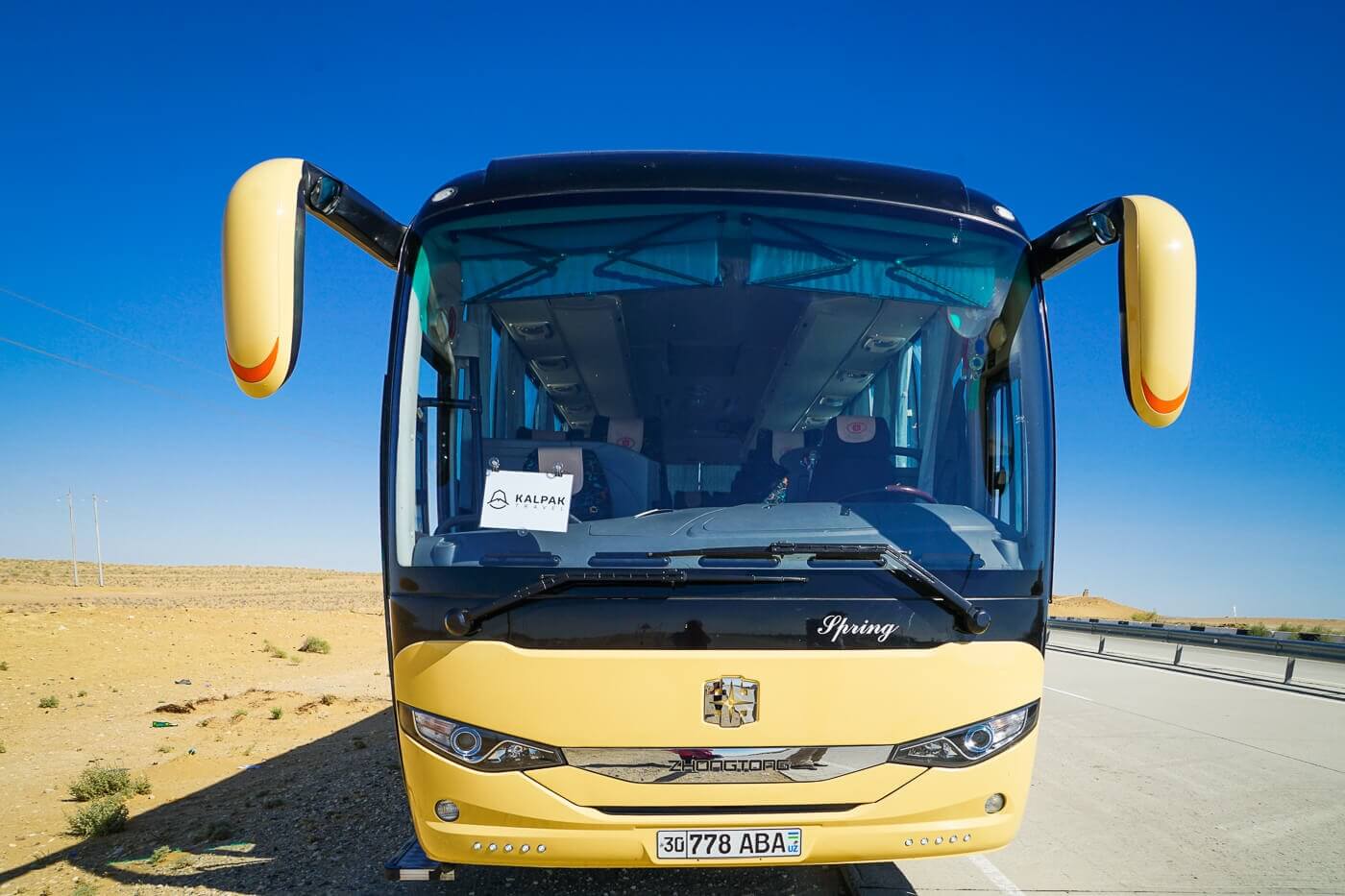
  • All transfers in a safe and comfortable vehicle with A/C, including airport transfers
  • Cultural activities mentioned in the itinerary
  • Economy class flights: Ashgabat-Dashoguz, Urgench-Bukhara, Dushanbe-Almaty, Almaty-Bishkek
  • Train ticket from Bukhara to Samarkand in Business Class
Price does not include
  • International airfares to and from Central Asia
  • Hotel charges for additional services
  • One dinner in Almaty
  • Consular fees for tourist visas
  • Travel insurance
  • Personal expenses (e.g., souvenirs)
  • Alcoholic beverages
  • Tips for guides and drivers

Important notes

  • All listed departures are guaranteed, starting from 1 person
  • The maximum group size is 12 people
  • The weather in Central Asia is stark continental, with cold winters and hot summers. We recommend traveling in spring (April/ May) or fall (September/ October).
  • You can opt to book the whole itinerary as a private tour. We can also arrange extra nights before or after the trip, and suggest private tour extensions.
  • We can advise and take care of all visas for you. All countries are visa-free for most nationalities, except Turkmenistan, where you get the visa on arrival.
  • A USD 500 per person deposit is required at the time of booking. The balance is due 15 days before departure. Terms & Conditions: https://kalpak-travel.com/terms-and-conditions/
  • We are happy to suggest flights to Central Asia and back home: please contact us.
  • See our book recommendation on Central Asia & the Silk Road
  • Read more about food in Central Asia

KAZAKHSTAN TRAVEL INFORMATION

MONEY & COSTS:

The Kazakh currency is called the Tenge (KZT). The banking system in Kazakhstan is the most developed in Central Asia and in big cities there are many places to exchange money and to withdraw cash from ATMs using a variety of cards. We recommend bringing some cash in new USD bank notes of denominations of at least 20 USD. Small and old-looking bank notes are harder to exchange. Paying directly with a credit card is possible in most places. An emergency fund of around 500 USD in cash is always good to have during guided trips to Central Asia.

SAFETY:

Kazakhstan is a multi-ethnic country with a long history of tolerance. Guests and locals are treated with respect and the whole country can be regarded as a very safe destination for travelers. That said, you are advised to wear a money belt, watch your belongings, avoid dark streets at night and take only official taxis. Your safety is our first priority at Kalpak Travel; we know and regularly assess all our Kazakh partners and we closely monitor political events.
ENTRY & EXIT:

Citizens of most Western countries do not need a visa for a stay of up to 30 days in Kazakhstan. To be sure whether you need a visa or not you can contact us. Any permits you might need for access to places that will be visited during your tour, we will provide them for you free of charge.
As soon as we receive the deposit payment for your tour, we will confirm your booking and send you an email with important pre-departure information. Please read it carefully as it contains important information on customs regulations for Kazakhstan.

BEST TIME TO GO:

The climate of Kazakhstan is continental and dry in the majority of the country, including the largest cities. Summers are very hot with day temperatures between 30° and 40° Celsius and winters are extremely cold with strong winds. In the mountains, however, the weather is quite changeable. If you are planning to visit the mountains the best season is summer. Be aware, however, at high altitudes of 3000 meters or more it may even snow overnight during the summer. For cultural sightseeing tours, spring and autumn are the best seasons. Autumn is also the time when the country goes to harvest, meaning markets are full of fresh fruit and vegetables.

HEALTH:

Do not drink water, unless it is bottled, filtered, or boiled. Do not use tap water for brushing your teeth or making ice either. Do not eat ice cream. Only eat well-cooked meat and fish, preferably served hot. Vegetables should be cooked and fruit peeled. If you follow these basic rules, you are likely to avoid any health issues like traveler’s diarrhea. Diphtheria, Hepatitis A, and Tetanus are recommended vaccinations for Kazakhstan. Ensure you are fully insured for medical emergencies including repatriation. Medical services in Kazakhstan are basic at best.

KYRGYZSTAN TRAVEL INFORMATION

MONEY & COSTS:

The Kyrgyz currency is called the Som (KGS). In the capital Bishkek and larger towns, there are many ATMs that you can find in shopping centers, supermarkets, or on the main streets. All of them accept Visa cards and some, like Kyrgyz Kommerts Bank, Demir Bank and Uni Credit accept other cards such as MasterCard. In the mountains and small villages, you better don't rely on ATMs. We also recommend that you bring some cash in new USD banknotes of denominations of at least 20 USD. There are many exchange offices, some working 24/7. Small and old-looking bank notes are harder to exchange. Paying directly with a credit card is possible in most shops and restaurants.

SAFETY:

Kyrgyzstan is the most liberal and democratic country in the Central Asian region. The political situation in the country is calm and there is nothing to suggest that this situation might change. Guests and locals are treated with respect and the whole country can be regarded as a very safe destination for travelers. That said, you are advised to wear a money belt, watch your belongings, avoid dark streets at night, and only use official taxis. Your safety is our first priority at Kalpak Travel; we know and regularly assess all our Kyrgyz partners and we closely monitor political events.

ENTRY & EXIT:

Citizens of developed countries do not need a visa for a stay of up to 60 days in Kyrgyzstan. To be sure whether you need a visa or not you can contact us. Any special permits that you might need for access to places that will be visited during your tour, we will provide to you free of charge.
As soon as we receive your deposit payment, we will confirm your booking and send you an email with important pre-departure information. Please read it carefully as it contains important information on customs regulations for Kyrgyzstan.

BEST TIME TO GO:

The climate of Kyrgyzstan is continental and dry in the majority of the country, including the largest cities. In the Ferghana Valley in the south and in the capital Bishkek, summers are very hot with day temperatures between 30° and 40° Celsius. However, most of the country is situated more than 1500 meters above sea level, where temperatures are in the mid-20s during summer. At high altitudes of 3000 meters or more it may even snow overnight during the summer, so make sure you bring some warm clothes. The best season to visit for activity or jeep tours would be in summer and winter for skiing tours. Please note, the weather in some mountain areas may change quickly.

HEALTH:

Do not drink water, unless it is bottled, filtered, or boiled. Do not use tap water for brushing your teeth or making ice either. Do not eat ice cream. Only eat well-cooked meat and fish, preferably served hot. Vegetables should be cooked and fruit peeled. If you follow these basic rules, you are likely to avoid any health issues like traveler’s diarrhea. Diphtheria, Hepatitis A, and Tetanus are recommended vaccinations for Kyrgyzstan. Ensure you are fully insured for medical emergencies including repatriation. Medical services in Kyrgyzstan are basic at best.

TAJIKISTAN TRAVEL INFORMATION

MONEY & COSTS:

The Tajik currency is called the Somoni (TJS). In the capital Dushanbe there are a few ATMs that you’ll find in shopping malls, supermarkets, or on the main streets, but most of them accept only Visa cards. Outside of Dushanbe, we don’t recommend relying on ATMs as there are only a few of them and they may run out of money or have very small withdrawal limits.
We recommend bringing cash in new USD banknotes of denominations of at least 20 USD. There are many exchange offices, some working 24/7. Small and old-looking bank notes are harder to exchange. Paying directly with a credit card is still not possible in most places, except for a few high-end restaurants and hotels.

SAFETY:

The political situation in the country has been calm in recent years and there are no indications of upcoming tensions. Guests and locals are treated with respect and Tajikistan can be regarded as a safe destination for travelers. That being said, you are advised to wear a money belt, watch your belongings, avoid dark streets at night and only take official taxi rides. Your safety is our first priority at Kalpak Travel; we know and regularly assess all our Tajik partners and we closely monitor political events.

ENTRY & EXIT:

Citizens of most countries do not need a visa to visit Tajikistan for a period of up to 30 days. A notable exception is the United Kingdom - UK citizens need to apply for an electronic visa to visit Tajikistan. You can get the visa yourself through the official government website for 30 USD per person: https://www.evisa.tj/. If you book a trip to Tajikistan with us we will get the visa for you.
Please note, if you are planning to visit the Pamir region, you need a GBAO permit, which you can purchase online, together with the eVisa, for an additional fee of USD 20. If you book a tour with us, we can get the GBAO permit for you.
As soon as we receive the deposit payment for your tour, we will confirm your booking and send you an email with important pre-departure information. Please read it carefully as it contains important information on customs regulations for Tajikistan.

BEST TIME TO GO:

The climate of Tajikistan is continental and dry across most of the country, including the largest cities. In regions situated at relatively low altitudes, such as the capital Dushanbe, the south of Tajikistan around Kulob, and the Khujand region, summers are very hot with day temperatures between 30° and 40° Celsius. However, most of the country is situated at high altitudes, where temperatures are in the mid-20s or less during the summer. If you visit the Fann or Pamir Mountains, make sure to bring some warm clothes, as it can get very cold at night at elevations of more than 3000 meters. The best season to visit Tajikistan is during summer when it's possible to go to the mountains.

HEALTH:

Do not drink water, unless it is bottled, filtered, or boiled. Do not use tap water for brushing your teeth or making ice either. Do not eat ice cream. Only eat well-cooked meat and fish, preferably served hot. Vegetables should be cooked and fruit peeled. If you follow these basic rules, you are likely to avoid any health issues like traveler’s diarrhea. Diphtheria, Hepatitis A, and Tetanus are recommended vaccinations for Tajikistan. Ensure you are fully insured for medical emergencies including repatriation. Medical services in Tajikistan are basic at best. Please note: there is a small risk of malaria in the south of Tajikistan by the borders with Uzbekistan and Afghanistan. None of our tours visit this region.

UZBEKISTAN TRAVEL INFORMATION

MONEY & COSTS:

The Uzbek currency is called the Som (UZS). There are many ATMs in the cities of Uzbekistan. Most stores and restaurants accept credit cards. We recommend you bring at least some money in cash, preferably carrying new USD bank notes of different denominations. They will be easy to exchange and you will be able to pay directly with USD for some souvenirs.

SAFETY:

Uzbekistan is a safe country and most trips are trouble-free. There is a visible police presence and most citizens are law-abiding. In Tashkent, Khiva, Bukhara, and Samarkand there is also a "tourist police" with English-speaking officers. That said, you are advised to wear a money belt, watch your belongings, steer clear of dark streets at night and avoid taking rides in unofficial taxis alone. Your safety is our first priority at Kalpak Travel; we know and regularly assess all our Uzbek partners and we closely monitor political events.

ENTRY & EXIT:

Citizens of most countries do not need a visa to visit Uzbekistan for a period of up to 30 days. A notable exception is the United States - US citizens below the age of 55 need to apply for an electronic visa to visit Uzbekistan. You can get the visa yourself through the official government website for 20 USD per person: https://e-visa.gov.uz/. If you book a trip to Uzbekistan with us we will get the visa for you.

BEST TIME TO GO:

The climate of Uzbekistan is continental and dry. The best season to visit is during spring and autumn, from mid-March until early June and then again from September until early November. Autumn is drier than spring, but even in spring chances are high you can enjoy the bluest sky you have ever seen. Autumn is also the time when the country goes to harvest, meaning markets are full of fresh fruit and vegetables. If you don’t mind the dry heat of 40°+ Celsius, summer is the best time to go. There are few tourists and the sky is blue every single day. If you consider visiting Uzbekistan in winter, having the country all to yourself, we recommend going in December, when the day temperature is still around 10° Celsius and the chill wind that characterizes January & February has not yet reared its ugly head.

HEALTH:

Do not drink water, unless it is bottled, filtered, or boiled. Do not use it for brushing your teeth or making ice either. Do not eat ice cream. Only eat well-cooked meat and fish, preferably served hot. Vegetables should be cooked and fruit peeled. If you follow these basic rules, you are likely to avoid any health issues like traveler’s diarrhea. Diphtheria, Hepatitis A, and Tetanus are recommended vaccinations for travelers to Uzbekistan. Ensure you are fully insured for medical emergencies including repatriation. Medical services in Uzbekistan are basic at best.
As soon as we receive your deposit, we will confirm your booking and send you additional pre-departure information.

TURKMENISTAN TRAVEL INFORMATION

MONEY & COSTS:

The Turkmen currency is called the Manat. International credit cards mostly do not work, and it is better not to use them to avoid unfavorable official exchange rate. We recommend bringing all money in cash, in new USD banknotes of denominations of at least 20 USD. They will be easy to exchange for rates that are much better than the official one.

SAFETY:

Turkmenistan is a safe country and most trips are trouble-free. There is a visible police presence and most citizens are law-abiding. That said, you are advised to wear a money belt, watch your belongings, steer clear of dark streets at night and avoid taking rides in unofficial taxis alone. Your safety is our first priority at Kalpak Travel; we know and regularly assess all our Turkmen partners and we closely monitor political events.

ENTRY & EXIT:

Citizens of every country in the world need a visa to enter Turkmenistan. As soon as you book a tour, we will ask you to provide some additional information to apply on your behalf for a letter of invitation. If the Ministry of Foreign Affairs approves your application, we will send you a letter of invitation. With this letter, you will be able to purchase the visa on arrival at Ashgabat Airport or at the land border.
As soon as we receive the deposit payment for your tour, we will confirm your booking and send you an email with important pre-departure information. Please read it carefully as it contains important information on customs regulations for Turkmenistan.

BEST TIME TO GO:

The climate of Turkmenistan is continental and dry and the best seasons to visit are Spring and Autumn, from mid-April until early June and then again from September until early November. Autumn is drier than Spring, but even in Spring chances are high you can enjoy the bluest sky you have ever seen. Autumn is also the time when the country goes to harvest, meaning markets are full of fresh fruit and vegetables. If you don’t mind the dry heat of 40° Celsius, sometimes more, summer is the best time to go. There are few tourists and the sun is shining every single day. If you are considering visiting Turkmenistan in winter you will practically have the country all to yourself. We recommend you go in November or December when daytime temperatures are still around 10° Celsius and the often chilly winds of January & February have not yet begun to make their presence felt.

HEALTH:

Do not drink water, unless it is bottled, filtered, or boiled. Do not use tap water for brushing your teeth or making ice either. Do not eat ice cream. Only eat well-cooked meat and fish, preferably served hot. Vegetables should be cooked and fruit peeled. If you follow these basic rules, you are likely to avoid any health issues like traveler’s diarrhea. Diphtheria, Hepatitis A, and Tetanus are recommended vaccinations for Turkmenistan. Ensure you are fully insured for medical emergencies including repatriation. Medical services in Turkmenistan are basic at best.

Customer Review

Related articles